
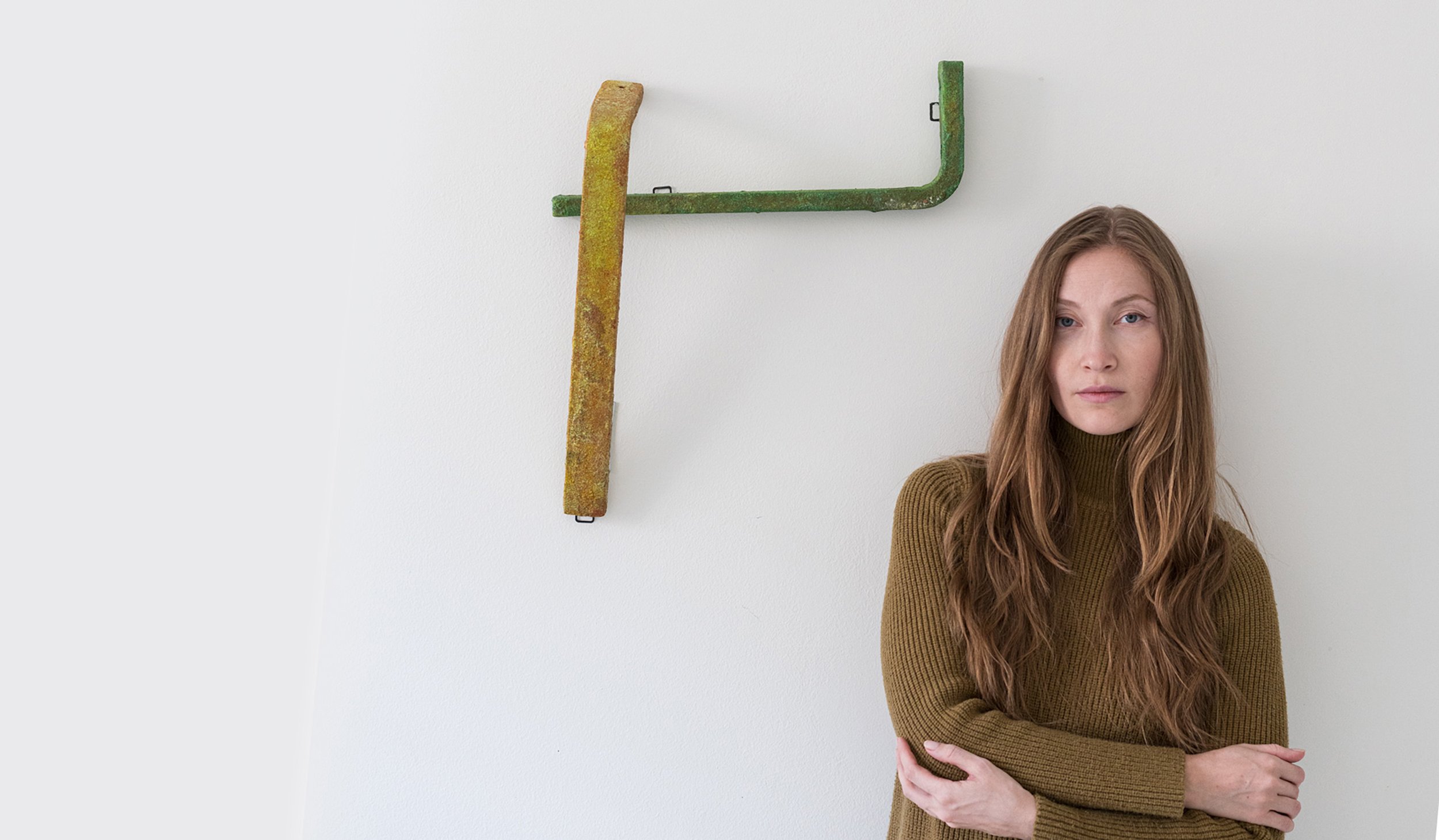
Biography
Vegesent (Veronika Kvitko) is a conceptual artist based in Helsinki, Finland. Her practice draws on Michel Foucault's biopolitics and the critique of anthropocentrism, examining how life becomes a category of power and which lives are allowed to fall out of view.
Born in Sarapul, Russia (1990), near the Ural Mountains, she was routinely involved in animal slaughter on the family farm. Rather than remaining a biographical memory, this experience became the foundation of her long-term artistic inquiry into the cultural and institutional conditions that shape visibility, normalisation, and moral distance.
She received a full eight-year scholarship to the Aesthetic School of Visual and Performing Arts in Sarapul and later completed a BA in Graphic Design at Metropolia University of Applied Sciences in Helsinki, Finland, in 2016.
Since 2007, she has worked across digital media, visual communication, and photography, developing ways to translate complex ideas into visual form. In her shift to conceptual contemporary art, she moved from communicating existing messages to using visual and material language as a tool for investigating questions herself.
She serves as a member of the Pool of Experts of the Finnish Arts and Culture Agency (KUVI), Finland’s national agency for the promotion of arts and culture, and Head of Sustainable Development and Art Education at the Helsinki International Artists Association.
Her work has received the A' Design Award and the Vegan Choice Award, recognizing the social impact of her artistic practice. Her work has been exhibited at Helsinki's Cable Factory and the Helsinki City Museum and featured in international publications including 100 Artists of Europe. Works are held in private collections across Europe and the United Kingdom.


Artist statement
I grew up on an animal farm where slaughter was part of everyday life. What I witnessed was not intentional cruelty, but indifference normalized and accepted as a social form. This experience became the impulse for my artistic practice.
My work is research-based. I bring scientific data and critical analysis into art through a conceptual shift from information to experience. I investigate how objective realities become shaped through social, economic and cultural structures, and how societies construct the ways reality is interpreted, communicated and given meaning.
Production animals are the lens through which I examine these processes. Their position within systems of food production, economics, culture and knowledge provides a concrete context for examining how societies understand and assign value.
I work with natural matter and found objects. The history embedded in each object, its metaphoric potential and ecological logic form the foundation of each work. Relief surfaces of sand and stone layered onto previously used objects create material relationships between human systems and the wider living world.
My installations create situations in which these frameworks can be observed through the viewer’s experience, exploring how perception and knowledge shape our understanding of objective realities.