
Vegan wall art: what it really means and how to choose
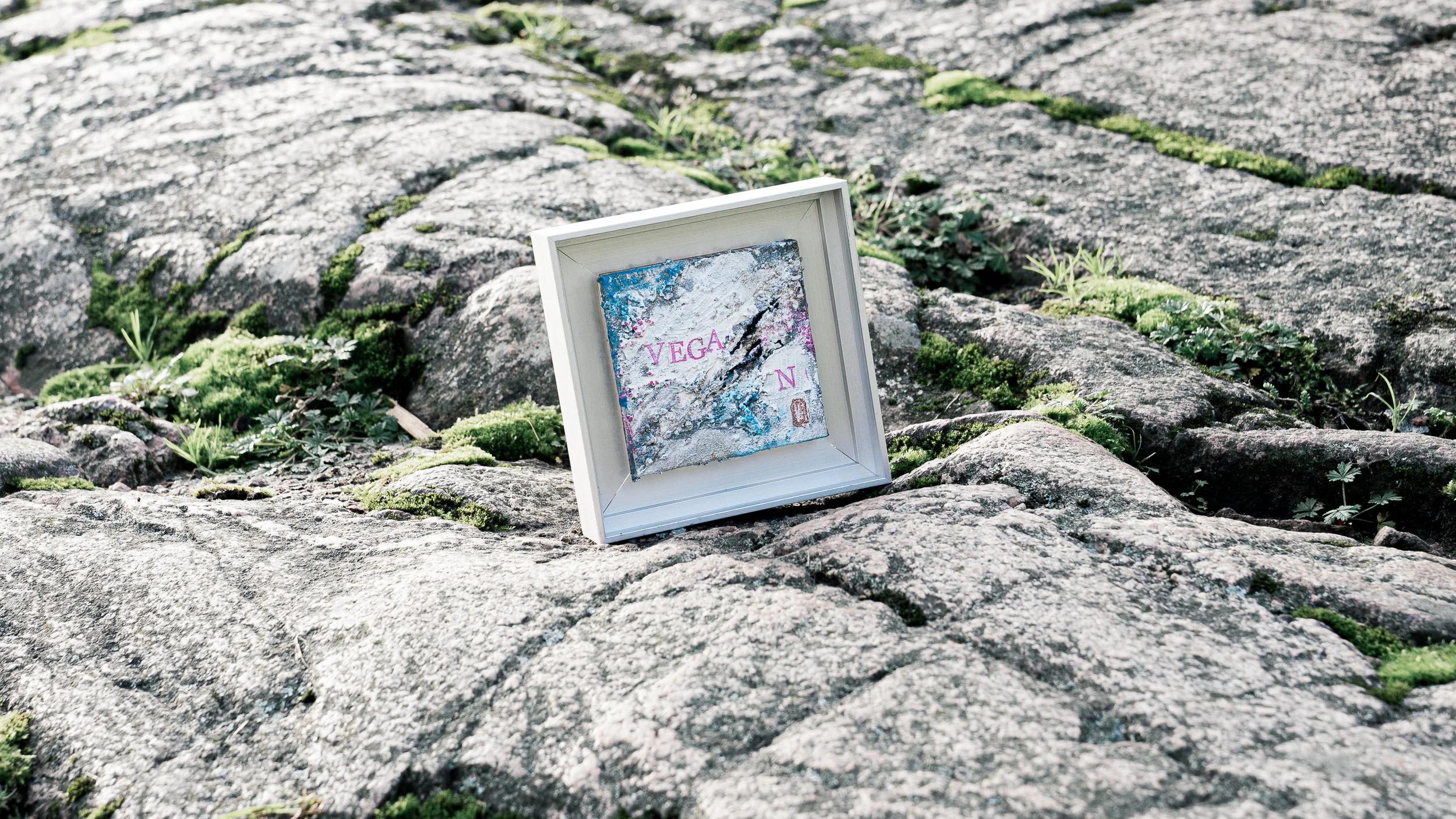
Vegan wall art reflects your values, but the phrase covers genuinely different territory depending on who made a piece and why. Most people searching for cruelty-free wall art want something that communicates their ethics without making the living room look like a protest leaflet. A print featuring a cow could carry a clear animal welfare message yet be produced with insect-derived inks and animal-glue-sized canvas. A beautifully textured, stone-like sculpture could be made entirely from reclaimed waste with zero animal inputs and still say nothing explicit about veganism at all. Both could legitimately claim the label, and neither is wrong for doing so.
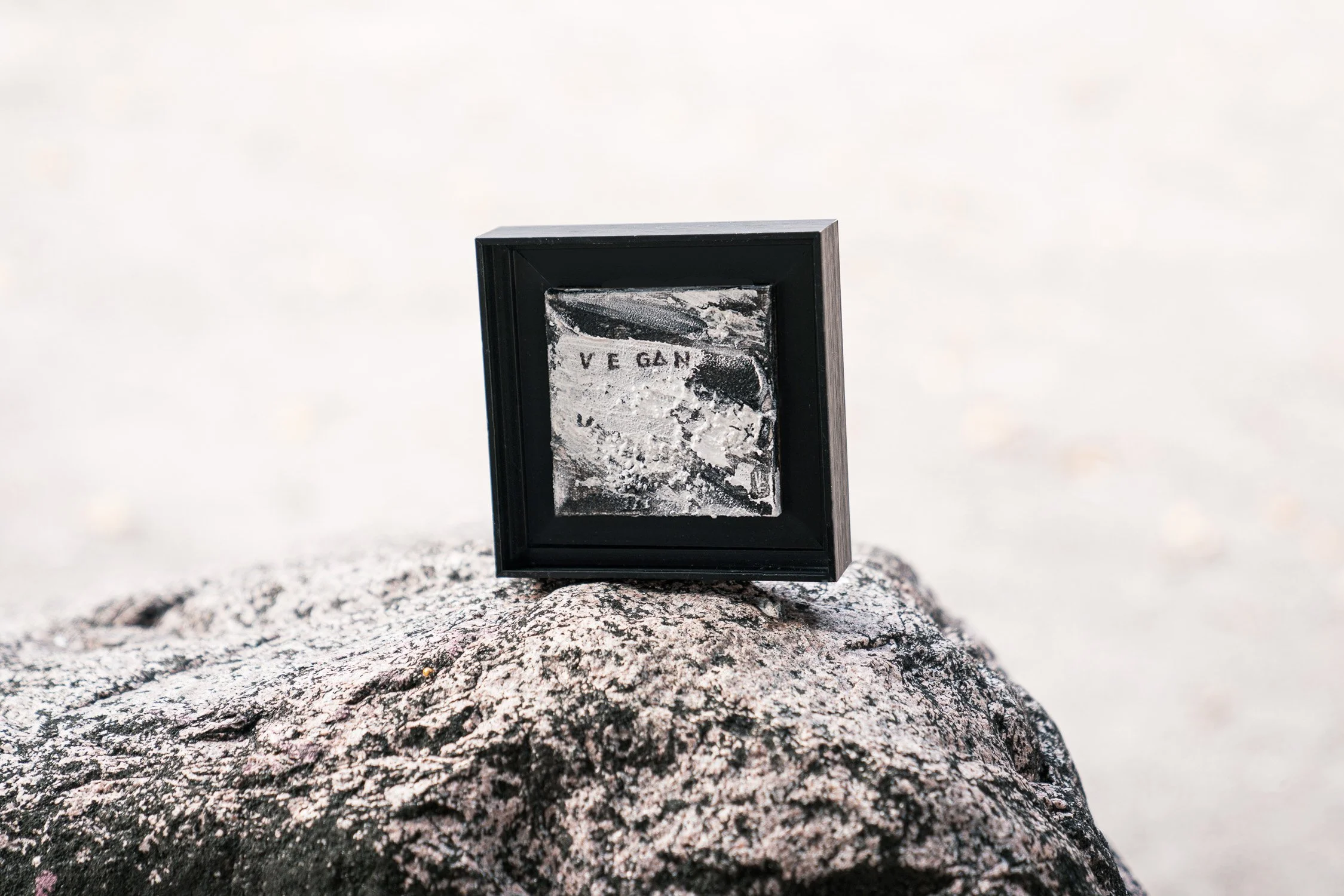
The choice that actually matters is understanding which layer you care about: the materials the work is made from, the message it carries, or both. This article walks through both so you can make a purchase that holds up to scrutiny. Whether you're decorating a minimalist living room, buying a gift for a vegan friend, or looking for art that functions as a genuine statement, the framework here will help you narrow it down quickly.
What "vegan wall art" actually means
Art made without animal-derived materials
The material side of this is less obvious than most buyers expect. Traditional art production routinely uses animal products, and the majority of them are invisible once a piece is finished. Rabbit-skin glue has been used for centuries to size canvas before priming. Bone black pigment, made from charred animal bones, is still used in some paints. Carmine, derived from cochineal insects, appears in reds and pinks. Gelatin-based coatings appear in some photographic and fine art papers, beeswax finishes are common in encaustic and mixed-media work, and casein, a milk protein, shows up in certain paints and adhesives.
A piece that is genuinely free of animal products needs to be clean at every stage: surface preparation, pigments, binders, varnishes, adhesives, and framing. Many print-on-demand products meet this standard because they commonly rely on synthetic and water-based materials throughout, though documentation varies widely and is often missing from listings. You're generally expected to assume it, or not think about it at all.

Art that speaks for animals
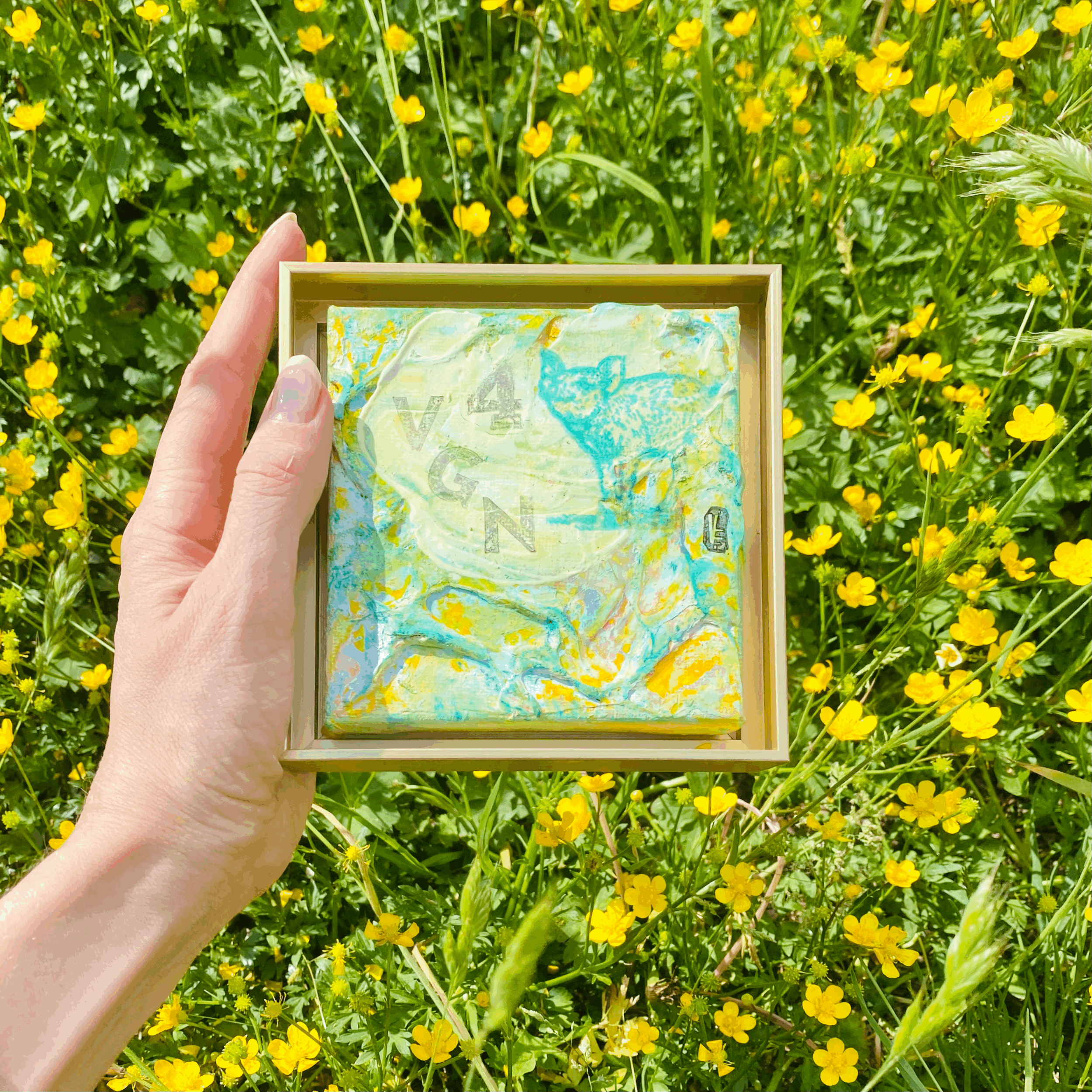
The second meaning is ideological rather than material. Art whose subject matter actively advocates for animal rights or visibility, whether through portraiture, activist illustration, or work that confronts viewers with the reality of how animals are treated, operates as something more than decor. These pieces make an argument. A slogan print in a kitchen is the most common version of this, but the category also includes complex figurative work, documentary-style animal studies, and sculptural pieces whose intent is to make animals visible in spaces where they are usually absent. Both definitions are valid and worth understanding. They just aren't the same thing, and conflating them leads to purchases that don't actually do what you wanted.
The materials that make art genuinely cruelty-free
What to check before you buy vegan art prints and originals
Plant-based and synthetic alternatives now cover most of the common production steps. Water-based or soy-based inks replace those using animal-derived binders. Cotton or linen canvas can be sized with synthetic alternatives instead of rabbit-skin glue. Frames can be made from FSC-certified wood, bamboo, or recycled polystyrene. Water-based adhesives handle mounting cleanly. Low-VOC inks are a bonus on both health and environmental grounds. The challenge is that most sellers don't document any of this in their listings, so buyers are often working from assumptions rather than facts.
The materials worth actively avoiding are: gelatin-based coatings in photographic papers, bone-derived pigments (bone black, ivory black), shellac-based varnishes, beeswax finishes, and animal-glue framing. None of these are common in mass-market print products, but they appear more frequently in hand-finished, mixed-media, and traditionally crafted work, which is exactly the kind of art that often attracts buyers who care about these things most.
Why eco-friendly and cruelty-free often overlap, but don't always
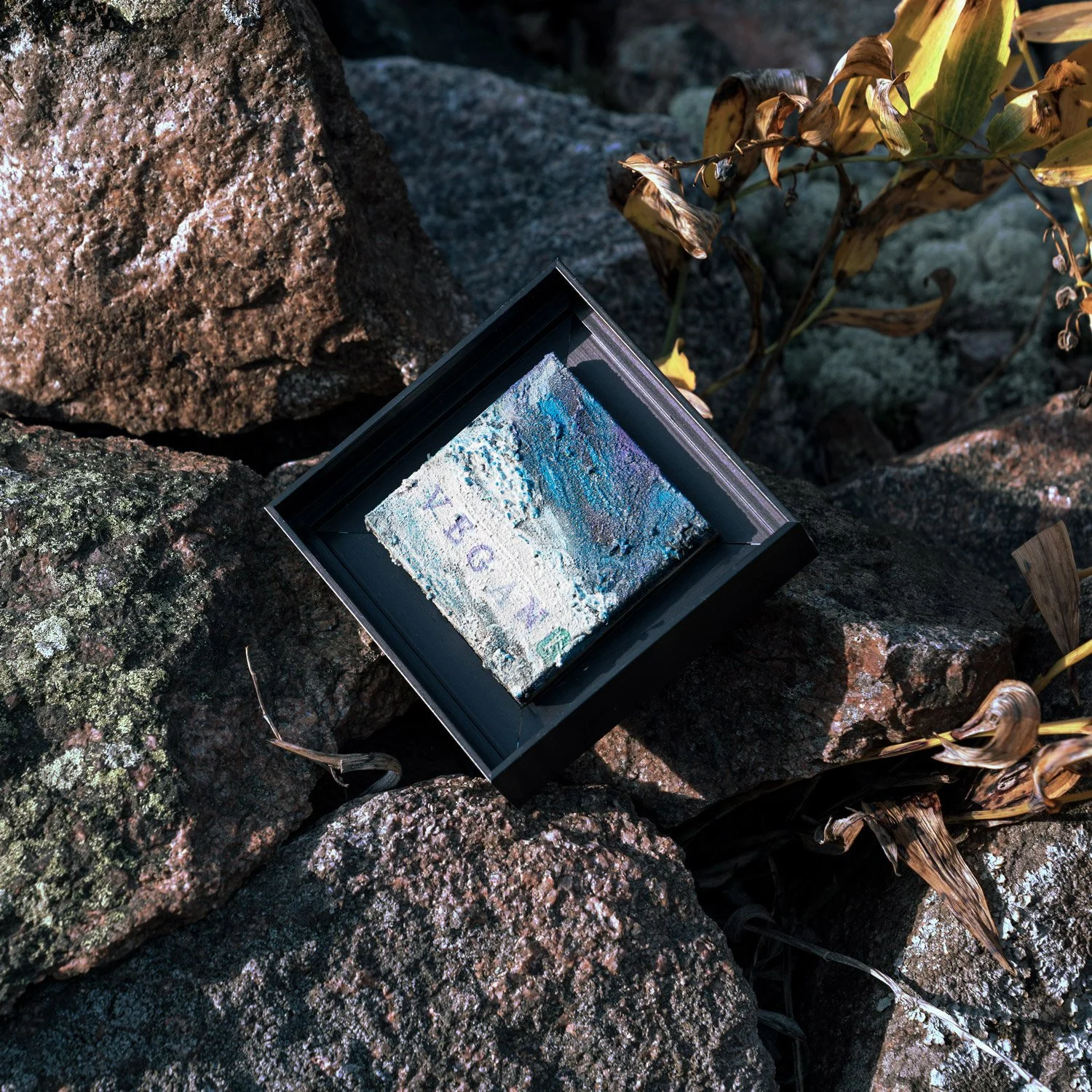
Sustainable production choices and vegan material choices frequently align. Recycled canvas, plant-based inks, and sustainably sourced frames tend to avoid animal inputs by design because the entire logic of the supply chain points toward synthetic and plant-derived alternatives. But eco-framing doesn't automatically mean a clean material chain upstream. A vegan canvas print on recycled substrate could still use a gelatin coating. An "organic" canvas could still use animal-glue sizing. The most trustworthy sources are independent artists who are transparent about their full material list, not just the paper stock or the frame certification. When an artist documents their process publicly, you're not taking anything on faith.
A lot of what sells under the heading of plant-based wall decor is really plant-adjacent aesthetics: botanical prints, earth-tone abstracts, or soft animal illustrations that feel vegan-aligned without taking any real position. There is nothing wrong with this if what you want is decor that reflects a gentle lifestyle alignment. It works well in many spaces and is produced in large volumes at accessible price points. But if you want your walls to do actual work, the piece needs to function as a visual argument. Activist animal-rights art places welfare, factory farming, or speciesism in front of anyone who walks into the room, without asking their permission to engage.
The distinction matters because the two categories serve genuinely different purposes. A botanical print in terracotta and moss green signals an appreciation for nature. A sculptural piece made entirely from reclaimed waste, whose subject matter centres on animal visibility, makes a harder-to-ignore impression, one that tends to stay with visitors longer. Neither is the wrong choice. They just have different jobs.
The real decision most buyers face is this: do you want art that quietly reflects your values in the background, or art that makes a statement to anyone who enters the space? Both are legitimate, and both serve different functions in a home. Worth adding to that question is the concept of cause-driven art buying. A purchase can support an artist whose practice is ideologically and materially aligned with your values, not just one whose output matches your colour palette. That kind of purchase compounds over time in a way that a mass-produced poster simply doesn't.
When both are true: how Vegesent approaches vegan wall art
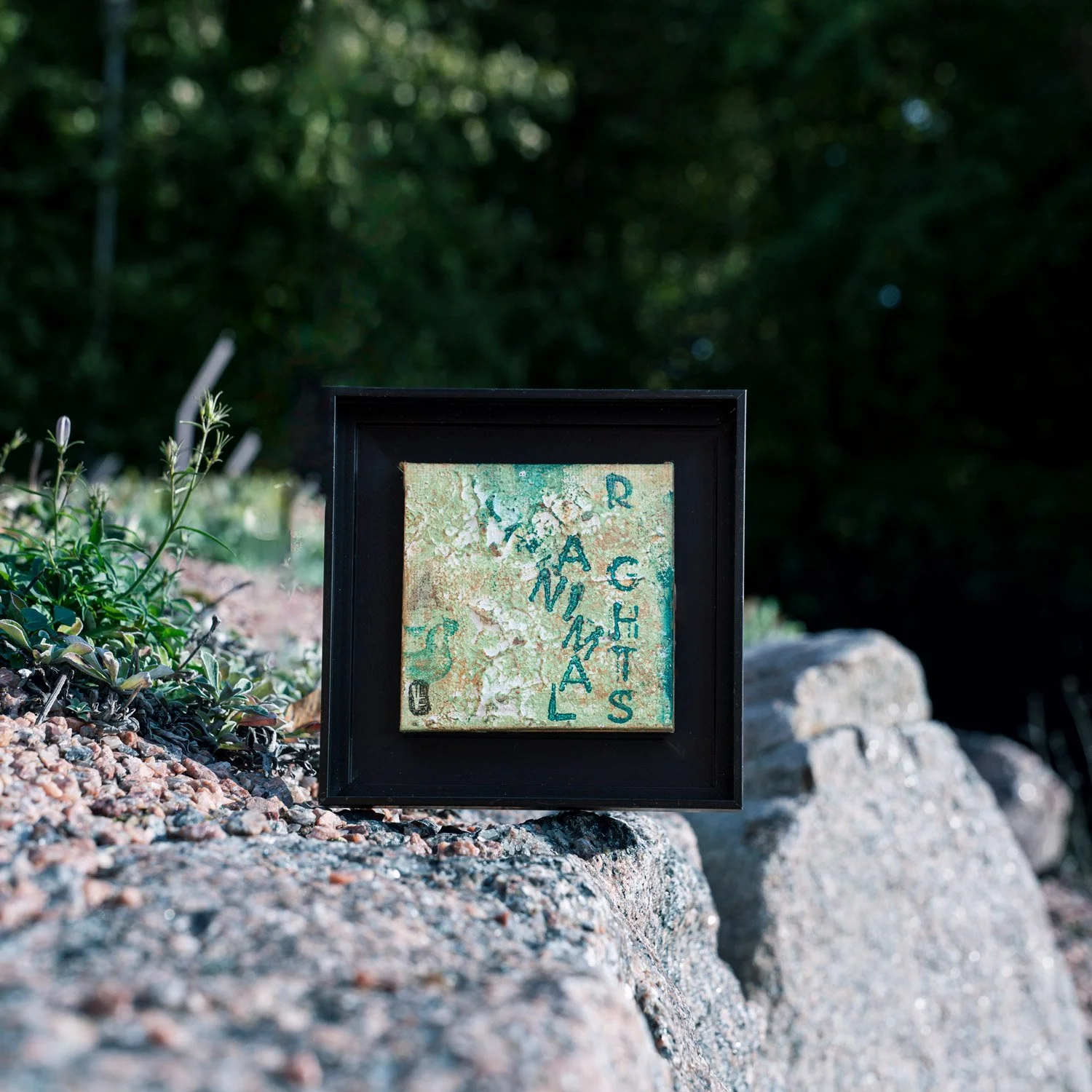
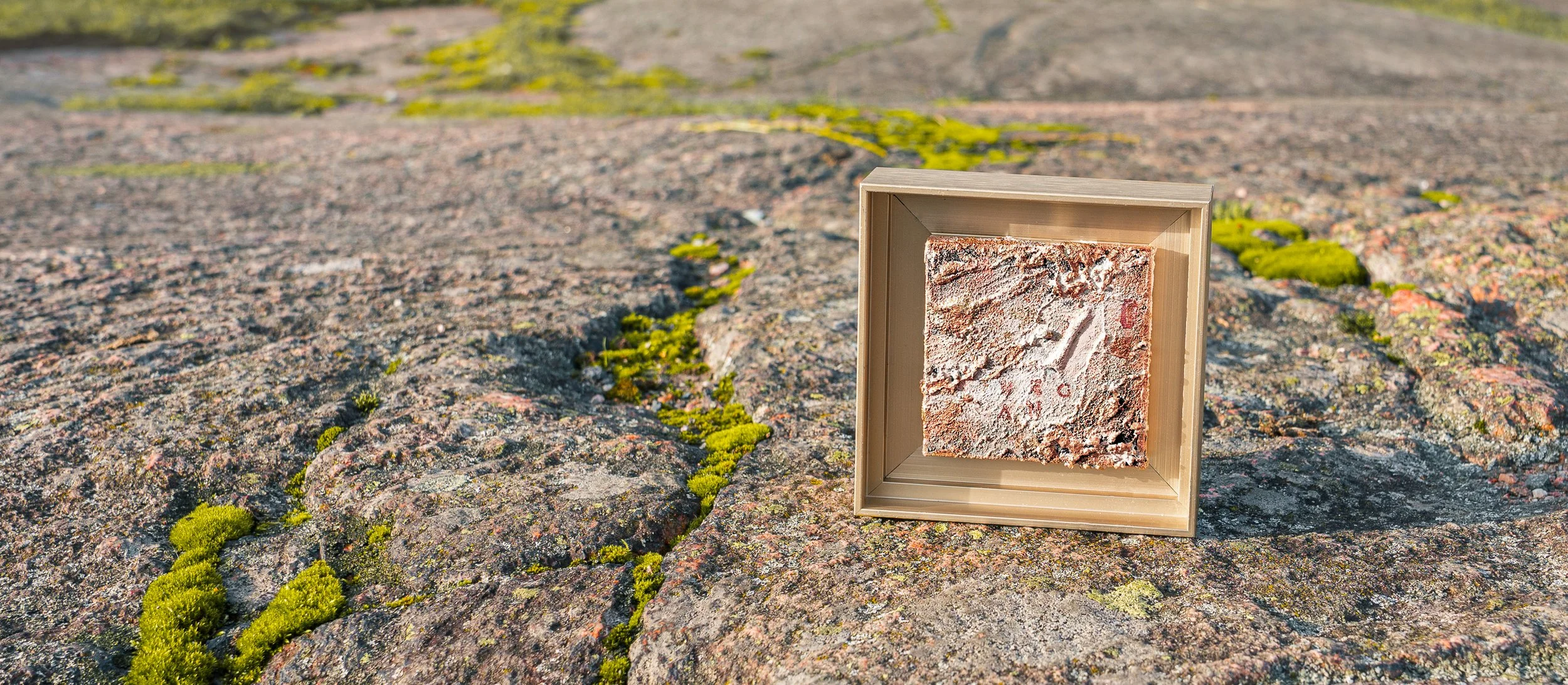
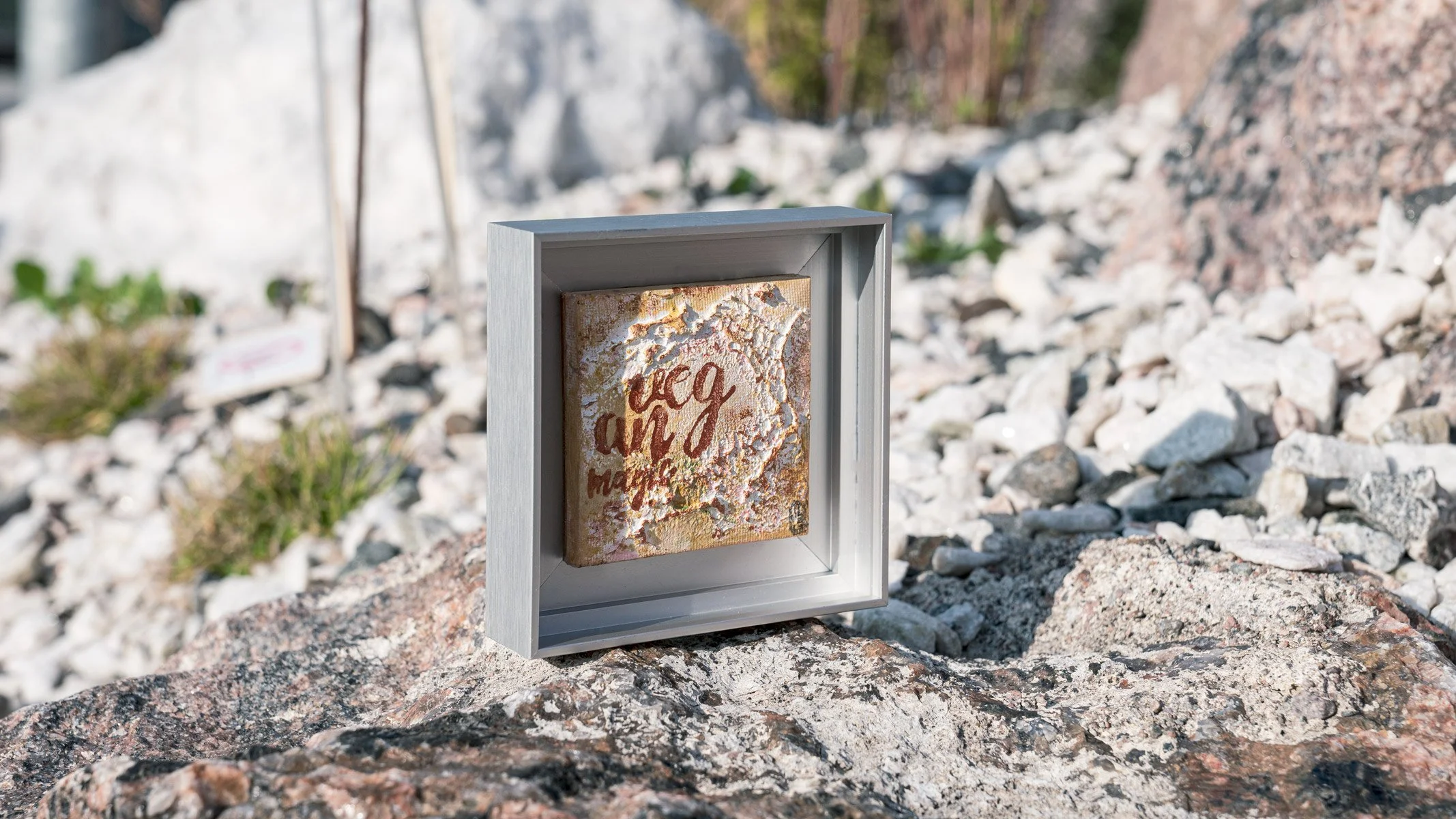
Vegesent is the art practice of Veronika, a Finnish artist whose work sits at a rare intersection: clean materials and clear intent, operating simultaneously. The sculptural wall pieces are built from reclaimed and recycled waste, with no animal products at any stage and no new raw material extraction, as documented in the artist's stated practice and studio materials notes (Vegan and eco-friendly wall art). The circular economy structure of the practice means the environmental footprint is minimal by design, not by marketing claim. The resulting pieces have a stone-like, tactile quality: substantial, textured, and impossible to mistake for a mass-produced print.
In a minimalist interior, a single Vegesent piece reads very differently from a framed poster or standard vegan canvas print. The raised surface catches light differently across the day. The organic forms reference material history without being literal about it. For buyers who want art that rewards sustained looking rather than a first glance, this kind of work holds up in a way that flat prints rarely do.
The animal welfare collection as wall-level advocacy
Vegesent operates two collections, as described on the studio's collection pages: one focused on environmental crisis, one on animal welfare and animal visibility. The animal welfare pieces function as visual arguments for how animals are seen and treated, not through slogans, but through sculptural work that asks you to stay with it. The artist reports having received Vegan Choice Award recognition, which speaks to a practice that already communicates its values through material transparency and ideological consistency. To learn more about vegan artists using art as activism, see Art to Heal: Meet the Vegan Artists Hoping to Change the World.
Where to buy vegan-friendly wall art and what to expect on price
Marketplaces, print-on-demand, and independent shops
The market breaks into three tiers, and each serves a different buyer. Print-on-demand platforms like Redbubble and Society6 vegan art prints offer the widest range of explicitly vegan-themed prints and vegan posters at the lowest price points, typically in the $15, $40 range for unframed options, with a large proportion of the content being slogan-based or illustrative. Etsy's vegan wall art marketplace sits in the middle: digital downloads and vegan art prints often start around $4, $10, physical prints run roughly $15, $50, and occasional original or handmade pieces appear at higher prices. The quality and transparency of sellers varies enormously on Etsy, so reading the full listing description rather than just the preview image matters here.
Independent artist shops and studio websites are where original, high-integrity, one-of-a-kind pieces live. Pricing for small originals often starts around $100 or higher and rises significantly for sculptural or mixed-media work, though ranges vary by artist and format. If you want examples of studio-scale small works, see Small vegan minimalist Art. This tier is where material transparency is most likely to be documented, and where your purchase directly supports a practice rather than a platform's algorithm.
In ethically produced wall art, price often correlates with material transparency and ideological intent. A $6 digital download of a "vegan vibes" illustration tells you almost nothing about how it was made or why. An original sculptural piece from an independent artist with a documented material practice tells you what you need to know before you commit. Connect price to purpose rather than just to budget. A single well-chosen original piece at $200 is a more durable investment than twenty matching prints from the same print-on-demand queue, both aesthetically and in terms of what the purchase actually supports.
How to style animal-friendly art in a minimalist or plant-based home
Choosing vegan canvas prints and sculptural pieces that work with your space
Texture matters more than most buyers account for at the point of purchase. A flat botanical print and a raised stone-like sculptural panel can share the same earth-tone palette and the same general scale, but they read entirely differently on a wall. For minimalist interiors, a single large-scale textured piece creates more impact than a gallery wall of coordinated prints. Earth tones, organic shapes, and matte finishes align with the warm minimalism that characterises 2026 interiors, see recent 2026 wall art trends for how texture and scale are being used this year. Scale the piece to the wall and the room's volume, not to the furniture below it.
When buying for a specific wall, consider how the piece will interact with light across the day. Sculptural surfaces catch morning and evening light differently from flat prints, which means the work is actively different at different times rather than static. That kind of presence is worth factoring into a decision, particularly for a piece intended to occupy a prominent position.
Building a collection that reflects your values over time
The strongest approach is a slow-built, considered collection rather than filling walls quickly. One original piece that carries real meaning is more coherent than twelve matching prints sourced from the same algorithm in an afternoon. If you're drawn to cause-driven art, pairing animal welfare-focused work with environmental pieces gives you walls that tell a fuller, more layered story over time. The most durable choices are the ones where material integrity, aesthetic quality, and personal values actually align. Those pieces don't date in the way trend-adjacent vegan home decor prints do.
Start with the materials, then follow the intent
Vegan wall art is not one thing. It runs from incidentally animal-free mass-market prints to deeply ideological, materially transparent original work, and everything in between has a legitimate place depending on what you want your walls to actually do. The two-layer framework holds across every price point and every context: what is the work made from, and what is it saying?
Practices like Vegesent exist at the intersection of both, and that combination is genuinely rare. Much of the work that claims eco or vegan credentials frequently delivers on one layer while leaving the other unexamined. When you find a practice that is transparent about materials, documented in its intent, and producing work that rewards sustained attention, that's the version worth seeking out.
If you're ready to explore vegan wall art that holds up on every level, start at Abstract vegan art by Vegesent: browse the collections, read the material notes, and see what a circular economy art practice actually looks like on a wall.
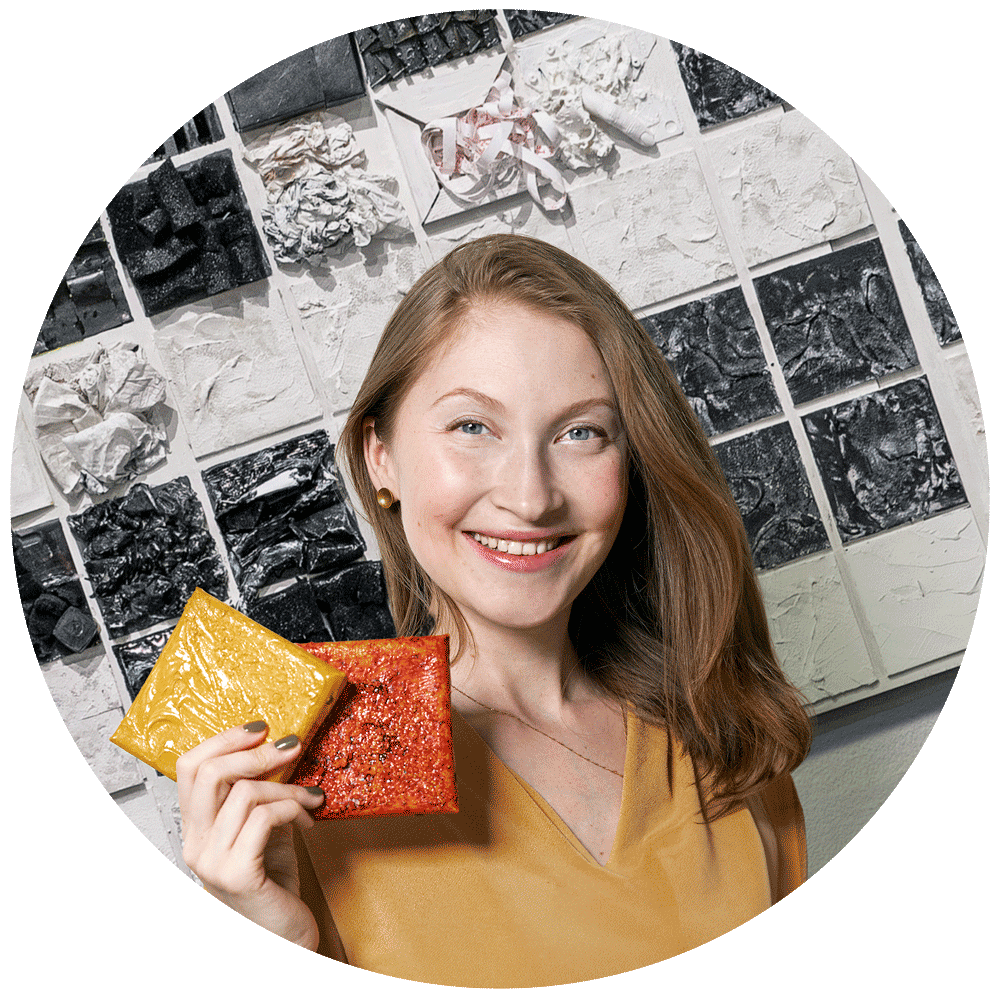
Author: Veronika Kvitko, a Finland-based artist and an advocate for human, animal, and environmental wellbeing. Vice Chairperson of the Helsinki International Artists Association.
Follow Veronika on social media and be part of the discussion on responsible art choices.


Made with vegan art supplies and recycled materials
Handcrafted original artwork – no copies or reproductions
Rich textured surface created with stone and organic pigment
Designed to display on wall, shelf, or coffee table
Eco-conscious art for vegan interior design
Framed in Finland with custom options available
Certificate of authenticity included
Expresses values of compassion, sustainability, and mindful living