
Vegesent | Conceptual Contemporary Art and the Politics of Visibility
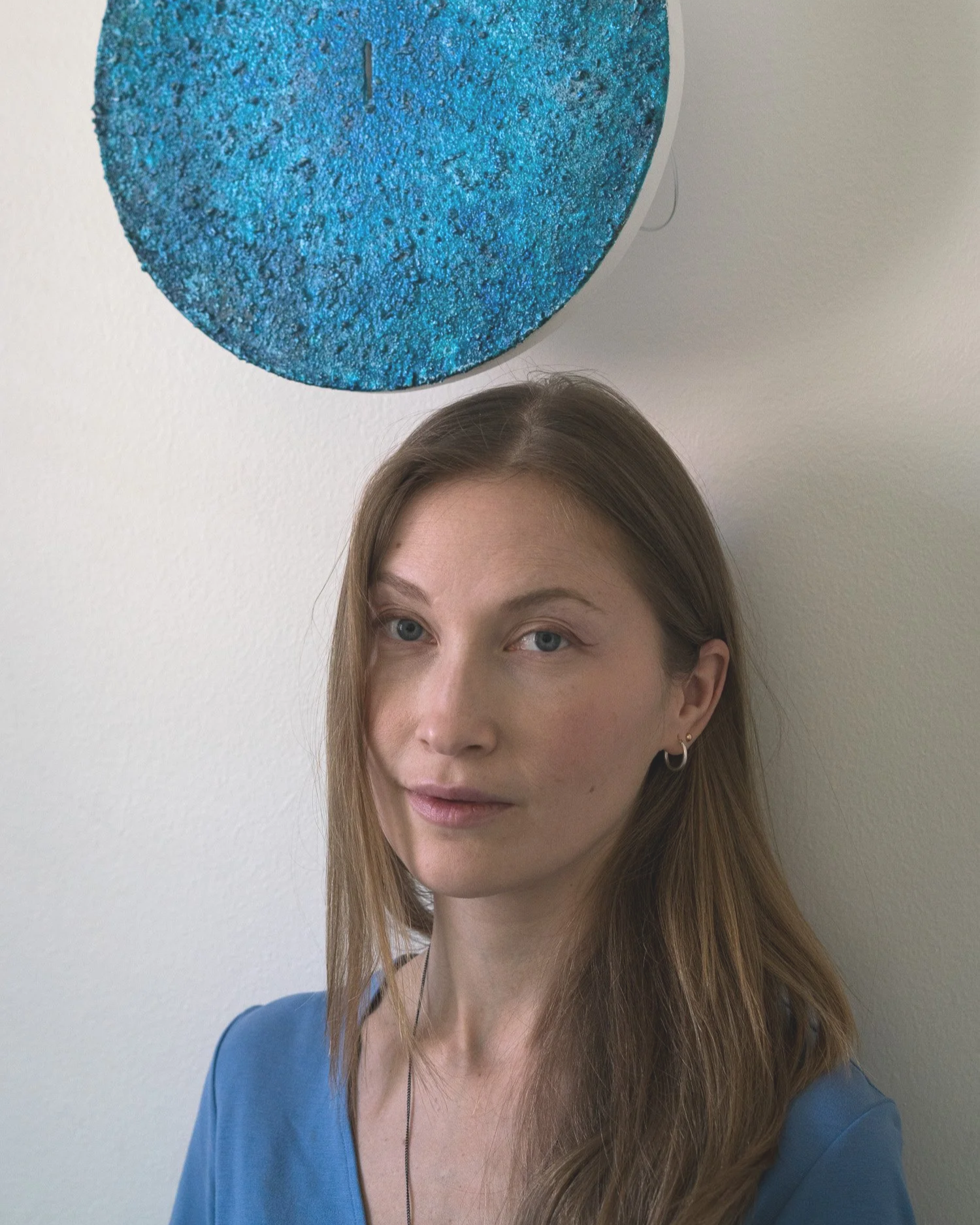
Vegesent is a Helsinki-based contemporary artist and conceptual artist whose contemporary art practice investigates how societies organize visibility:
how certain forms of life become seen, valued, protected, or withdrawn from view. Through research, material investigation, and conceptual abstraction, the work examines the structures that determine what becomes present in public perception and what becomes socially invisible.
The practice begins with a personal experience that became a question.
I grew up on an animal farm where slaughter was part of everyday life. What I witnessed there was not intentional cruelty but indifference as a social norm. Killing animals was not hidden. It was ordinary. As an artist I chose to make visible what this routine had taught me to overlook. My work comes from the childhood I have lived and decided to question as an adult.
Most people experience a different separation. Animal products can be part of everyday life while the processes that produce them remain largely outside public perception. The animal can disappear between the living being and the finished product. I have lived both realities: the reality in which killing animals was visible and ordinary, and the reality in which the same processes can remain distant, abstract, or unseen.
This difference became the starting point of my artistic research.
My work is not an attempt to accuse or persuade. It is an attempt to understand how two completely different realities can coexist within the same society. How can something be materially present while remaining socially invisible? How can a society recognize an object, product, or economic process while remaining distant from the life and death that sustain it?
These questions form the foundation of my contemporary art practice.

Research and social invisibility
I observe the structures that govern how certain lives are seen, valued, or withdrawn from view. I expose the logic by which some forms of life become hidden in plain sight, kept out of language and outside of concern.
This condition can be understood through the concept of social invisibility: the process through which realities remain materially present while becoming absent from collective attention. Social invisibility is not simply a matter of an individual failing to look. It can be produced through language, economic systems, institutions, cultural traditions, habits, spatial separation, and everyday practices.
Every society organizes attention.
It decides what deserves protection, what deserves empathy, what becomes economically valuable, and what can remain outside concern. These decisions are rarely made through a single conscious act. They become embedded in systems and repeated until they appear natural.
Industrial animal agriculture provides a particularly clear lens through which these mechanisms can be examined. The animals exist physically within the system, are counted economically, managed institutionally, and transformed into commodities, while their individual lives and deaths can remain distant from the perception of those who participate in the system through consumption.
The subject therefore extends beyond animals.
The question is how a society makes ethically significant realities disappear while allowing itself to continue functioning normally.
This is where my practice moves from personal experience into a broader investigation of perception, value, and power.
The work examines how cultural, economic, and institutional systems determine which forms of life become visible, valued, or invisible. Production animals are one lens through which these broader structures can be observed. The same question can extend toward environmental destruction, labor exploitation, colonial histories, and other realities that are materially present but socially displaced from attention.
The artwork does not attempt to provide a simple answer. It creates a situation in which the organization of visibility itself can become observable.
Biopolitics and the organization of life
Michel Foucault's concept of biopolitics offers an important frame for understanding this investigation. Biopolitics describes forms of power through which life becomes an object of management, classification, regulation, and knowledge. Certain lives become counted, measured, administered, protected, or optimized, while other forms of life can be excluded from comparable forms of concern.
My practice approaches this framework through the question of visibility.
Which lives are made visible?
Which lives become statistics?
Which become products?
Which deaths are acknowledged?
Which forms of suffering remain outside language?
And what systems make these distinctions appear ordinary?
The critique of anthropocentrism extends this frame. The human is not above the biosphere but a part of it, equal in matter and consequence. To make this claim is to question the hierarchies that decide whose lives count, whose deaths are visible, and whose suffering is acknowledged.
This does not mean that all forms of life are identical. It means questioning the cultural hierarchy through which human interests are routinely positioned as separate from, or above, the living systems that make human existence possible.
This is the contemporary ground on which my practice stands, and the conversation it enters is already underway in philosophy, ecology, animal studies, environmental humanities, and contemporary art.
Making the invisible visible
At the center of the practice is an ongoing movement from the invisible to the visible.
Making the invisible visible does not mean simply presenting something that was previously hidden. It means examining the structures that made it possible for something to remain unseen in the first place.
Visibility is therefore not neutral.
What becomes visible can become available for discussion, measurement, empathy, criticism, or political action. What remains invisible can continue without the same degree of scrutiny.
My work investigates this relationship between visibility and perception. Research uncovers socially hidden realities. Visibility asks how those realities become absent from public perception. Material translates those structures into physical form. Perception completes the work through the viewer's act of looking.
Research → Visibility → Material → Perception.
This sequence forms the conceptual structure of the practice.
Scientific data and research are brought into art through analysis and conceptual shifts. Facts do not appear simply as information within the work. They become material for thinking. Data can reveal a scale, a pattern, a system, or a contradiction that ordinary perception has difficulty holding.
The artwork then performs a translation.
Something that exists as information, structure, number, history, or social process is given physical form. The aim is not to illustrate the research but to transform its underlying logic into an encounter.
Material as translation
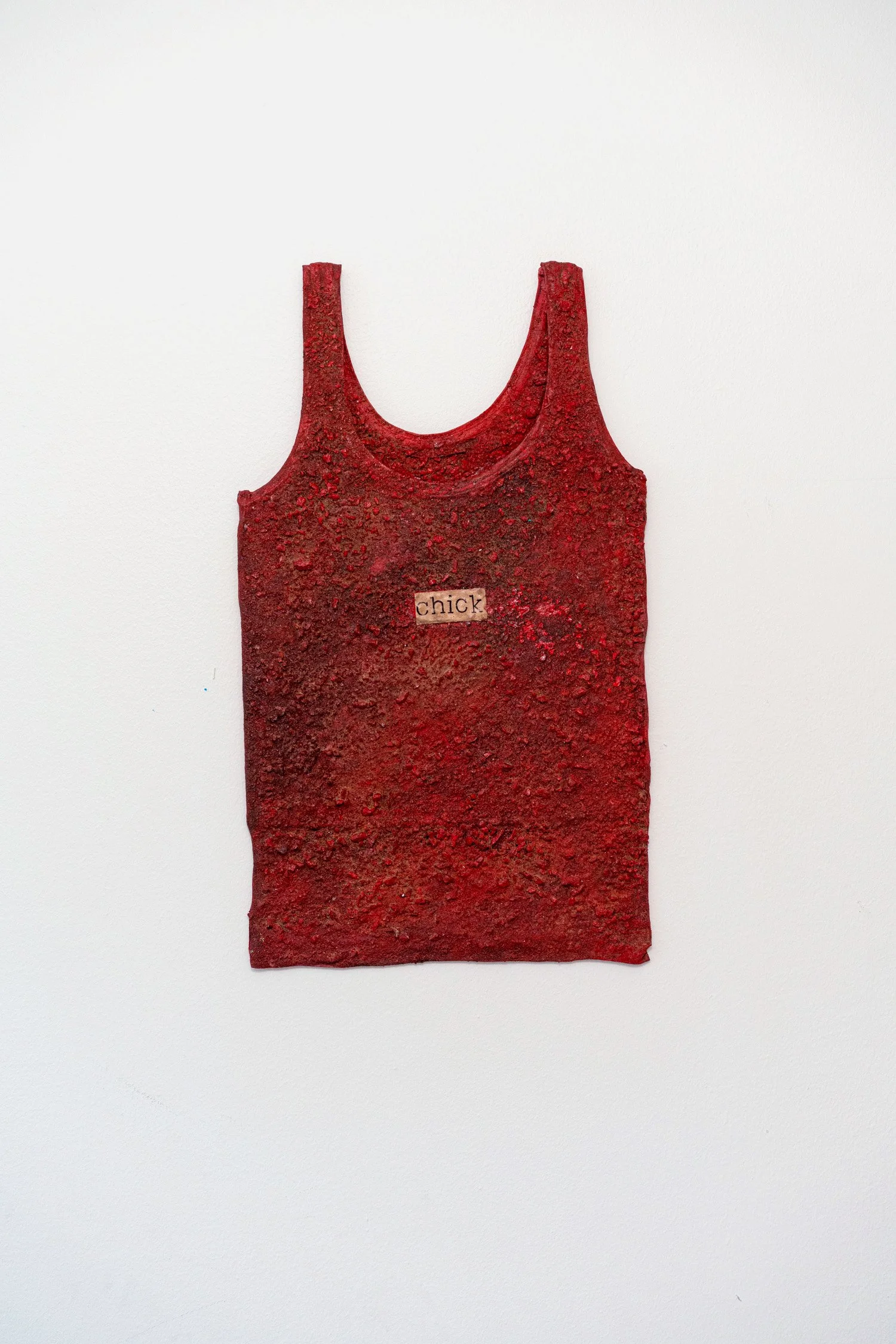
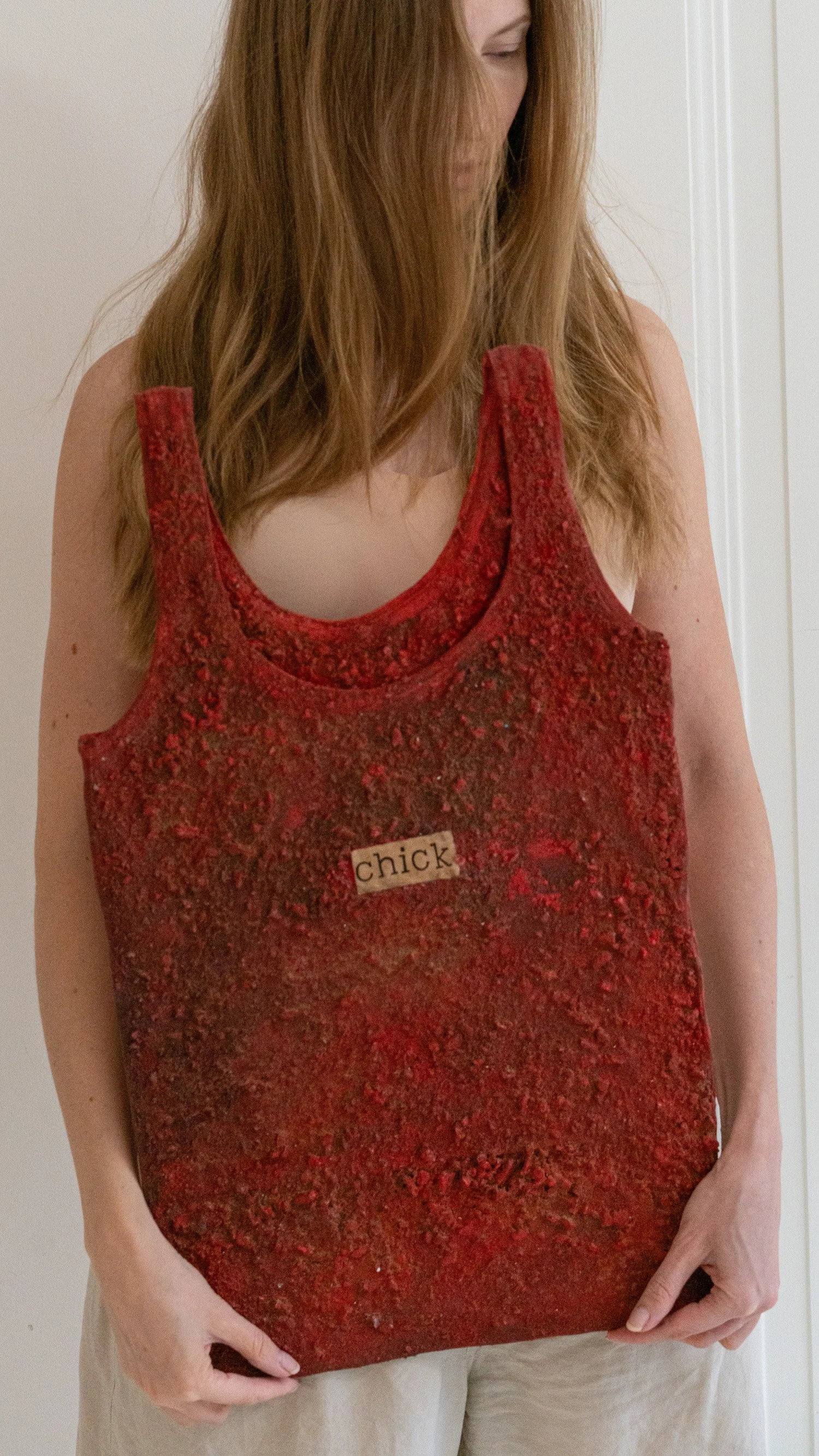
Within this ground I work through metaphor and contrast. I bring together matter that has been used by humans and matter drawn from the Earth. I place the discarded and the elemental on the same surface.
The contrast carries the argument.
Nothing stands above its origin in material, and nothing is fully separate from the life around it. Each pairing asks the viewer to weigh what was once valuable against what was once invisible, and to notice that the division between them is more recent than it feels.
Material is therefore not decoration or a secondary element of the work. It is part of the research.
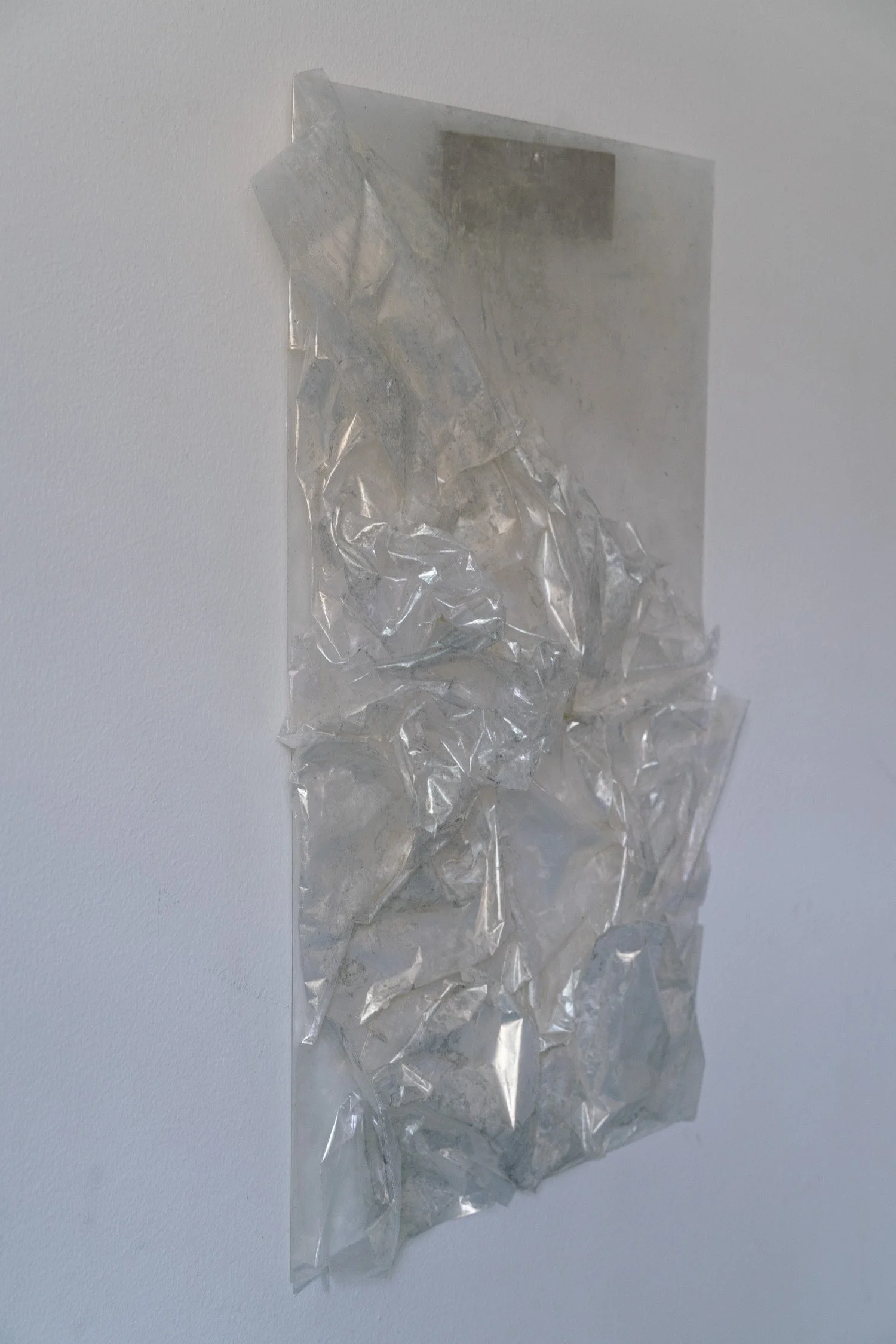
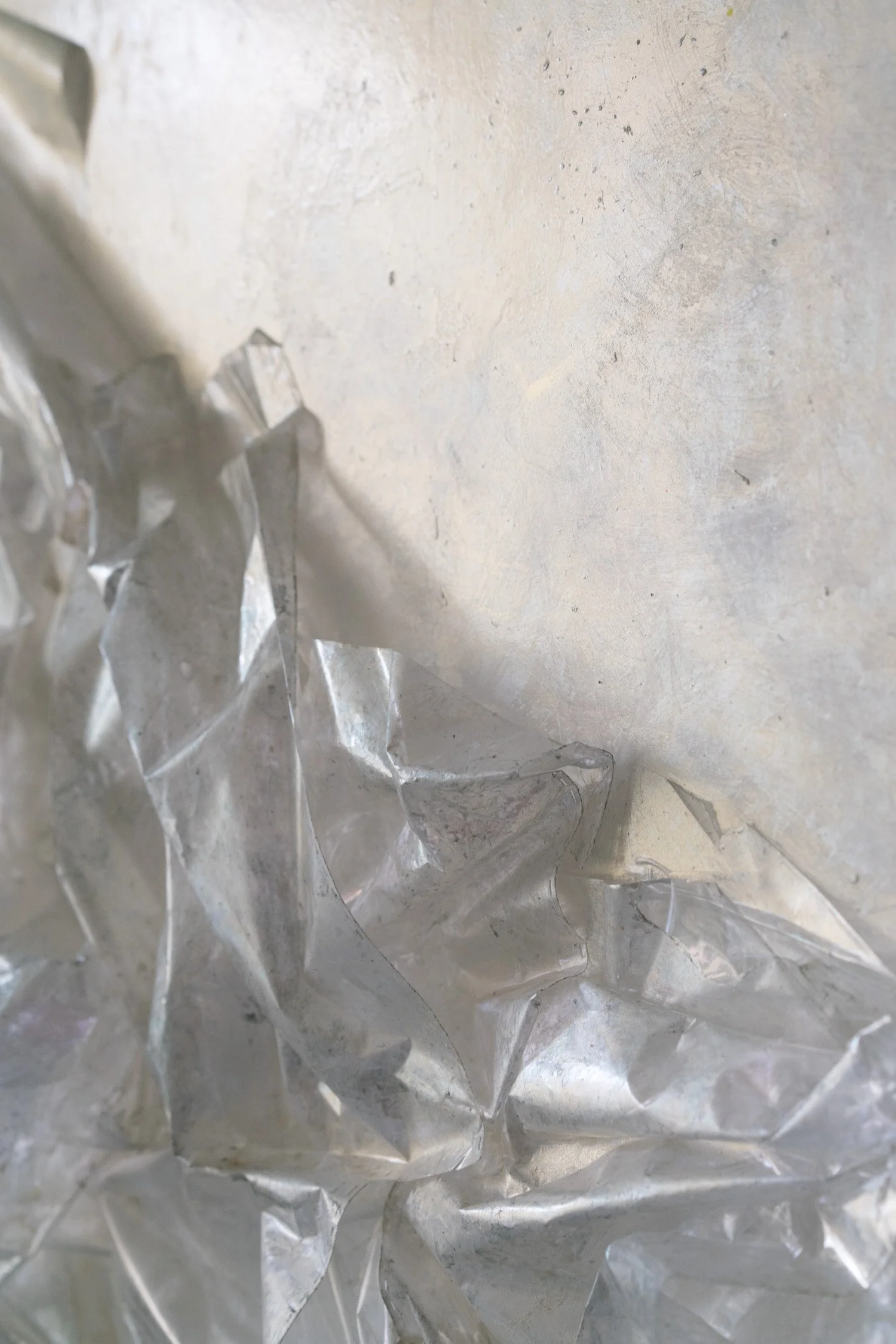
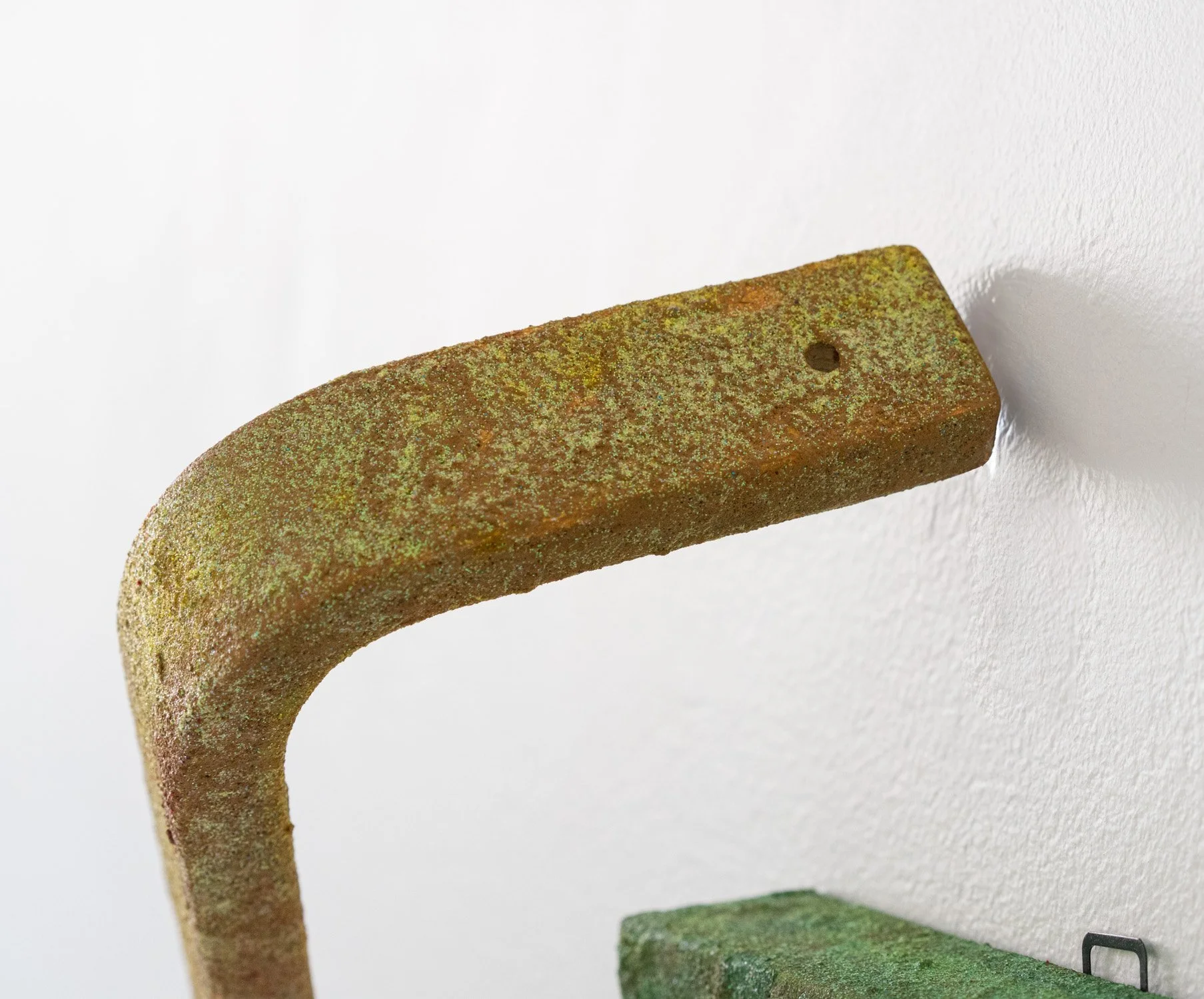
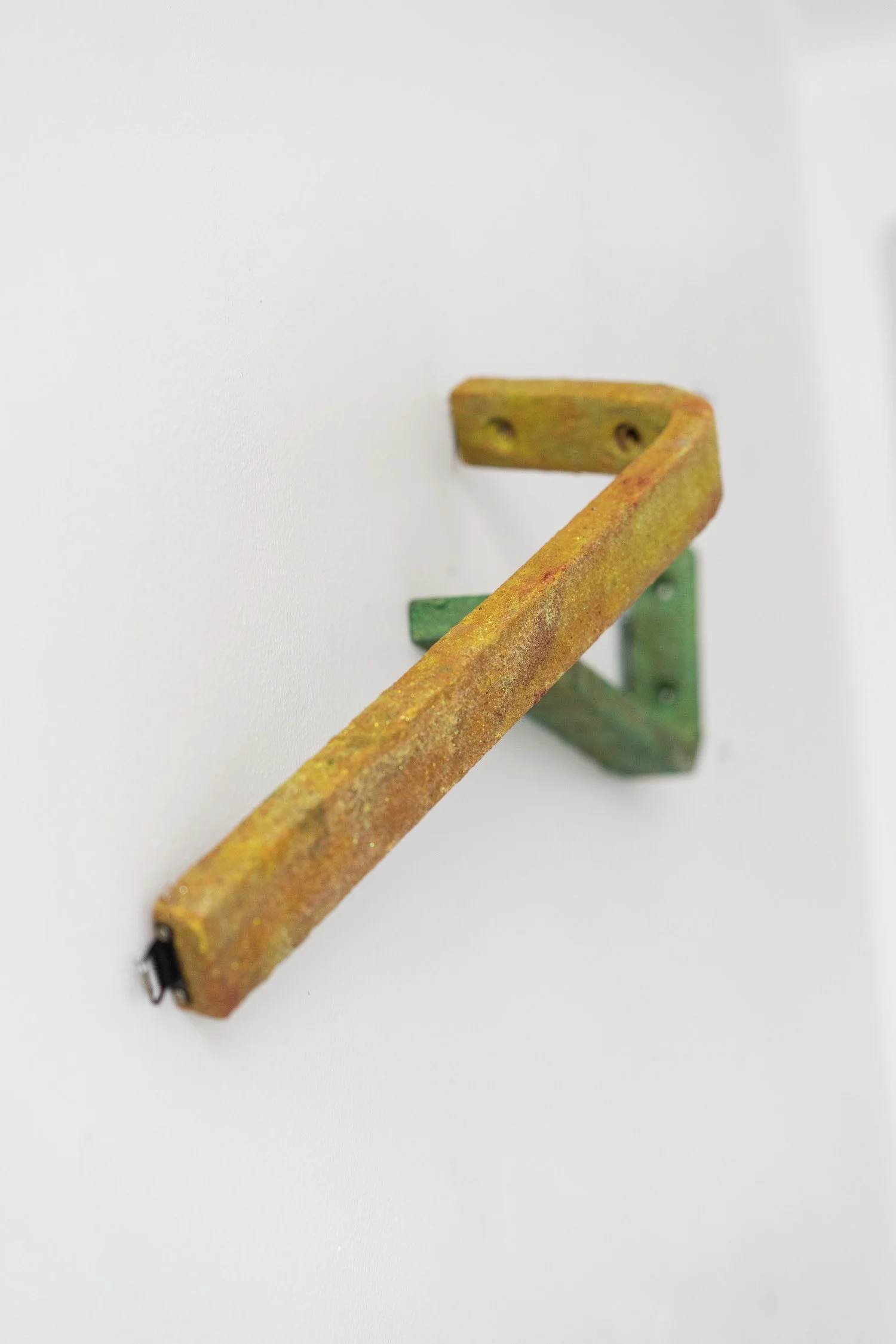
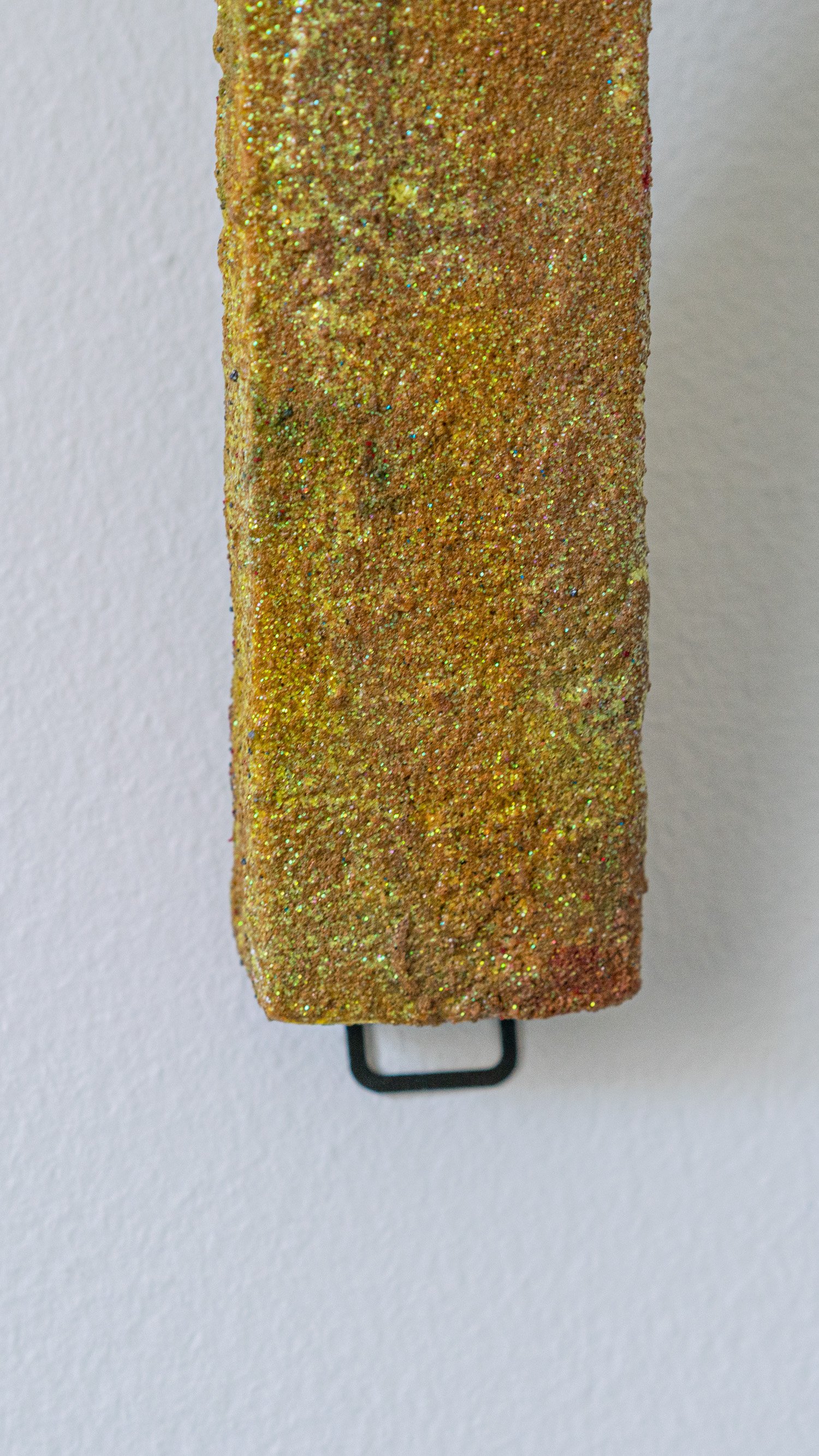
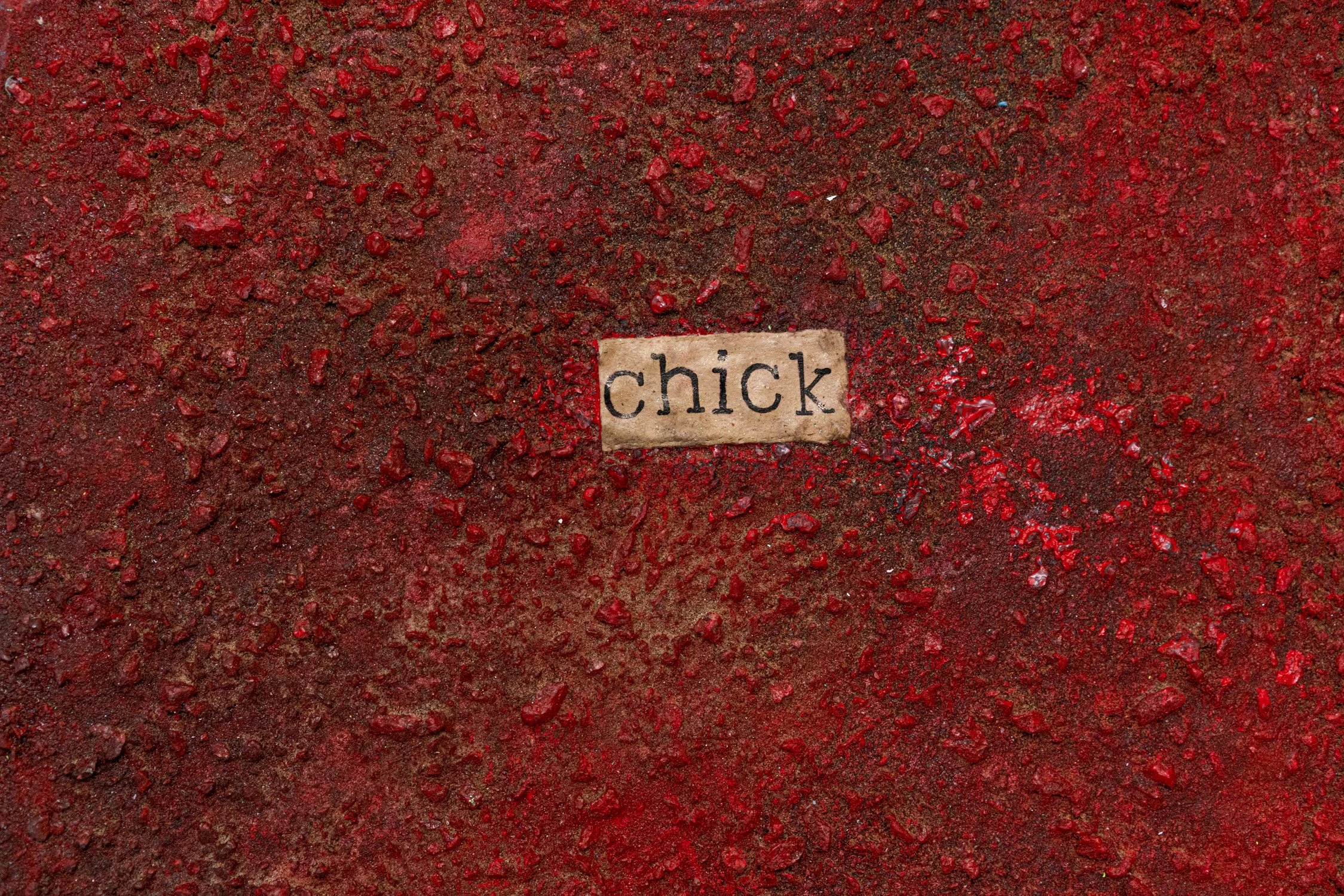
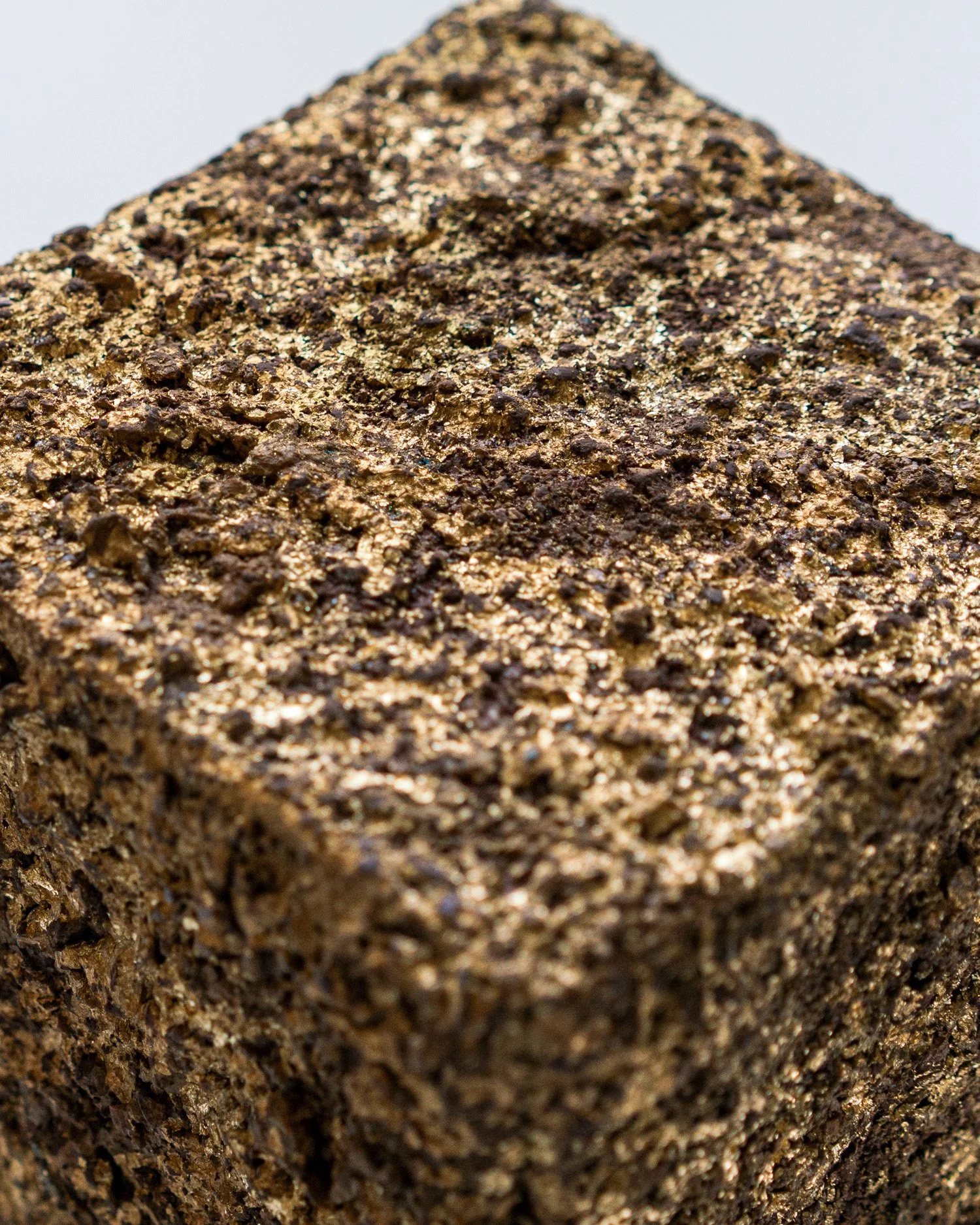
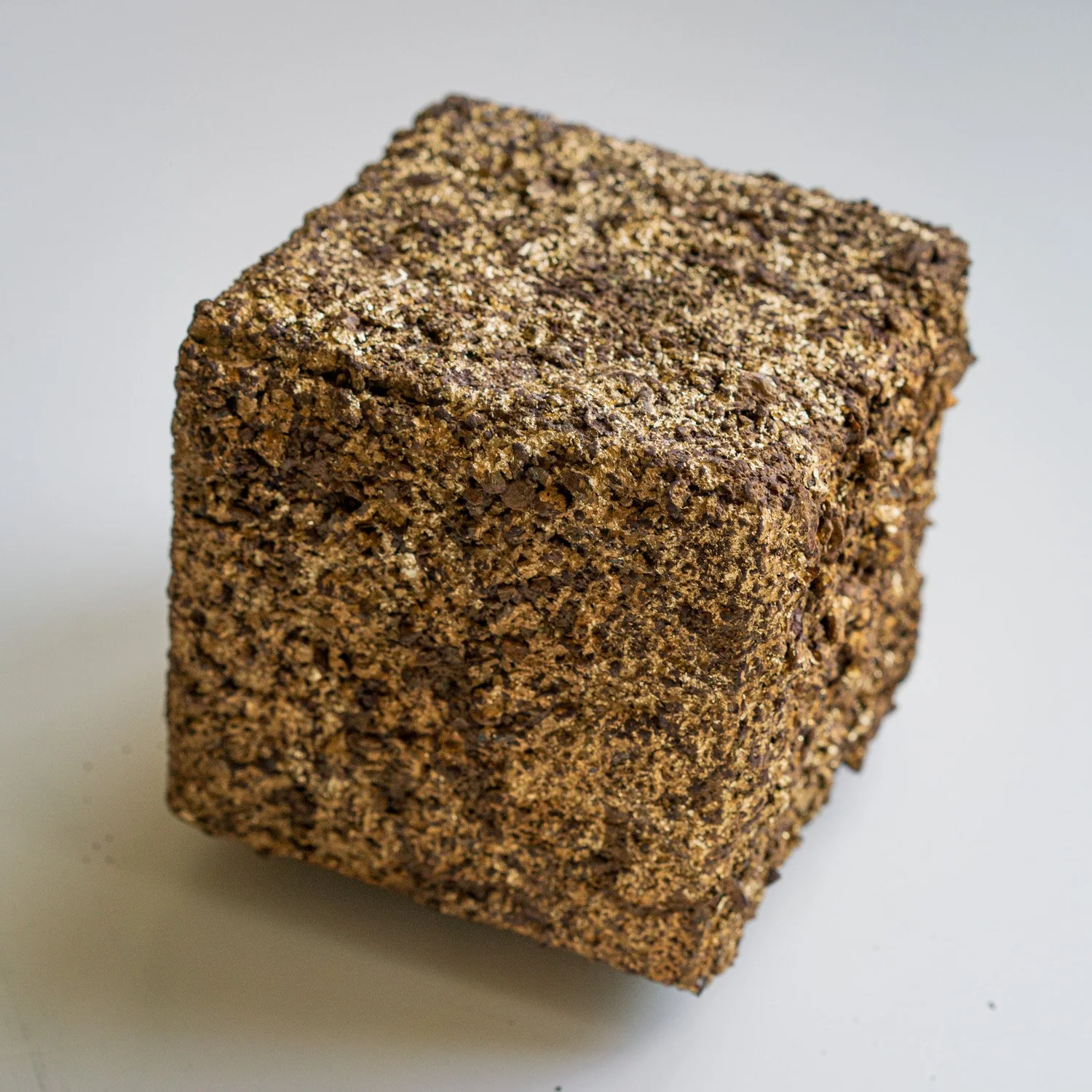
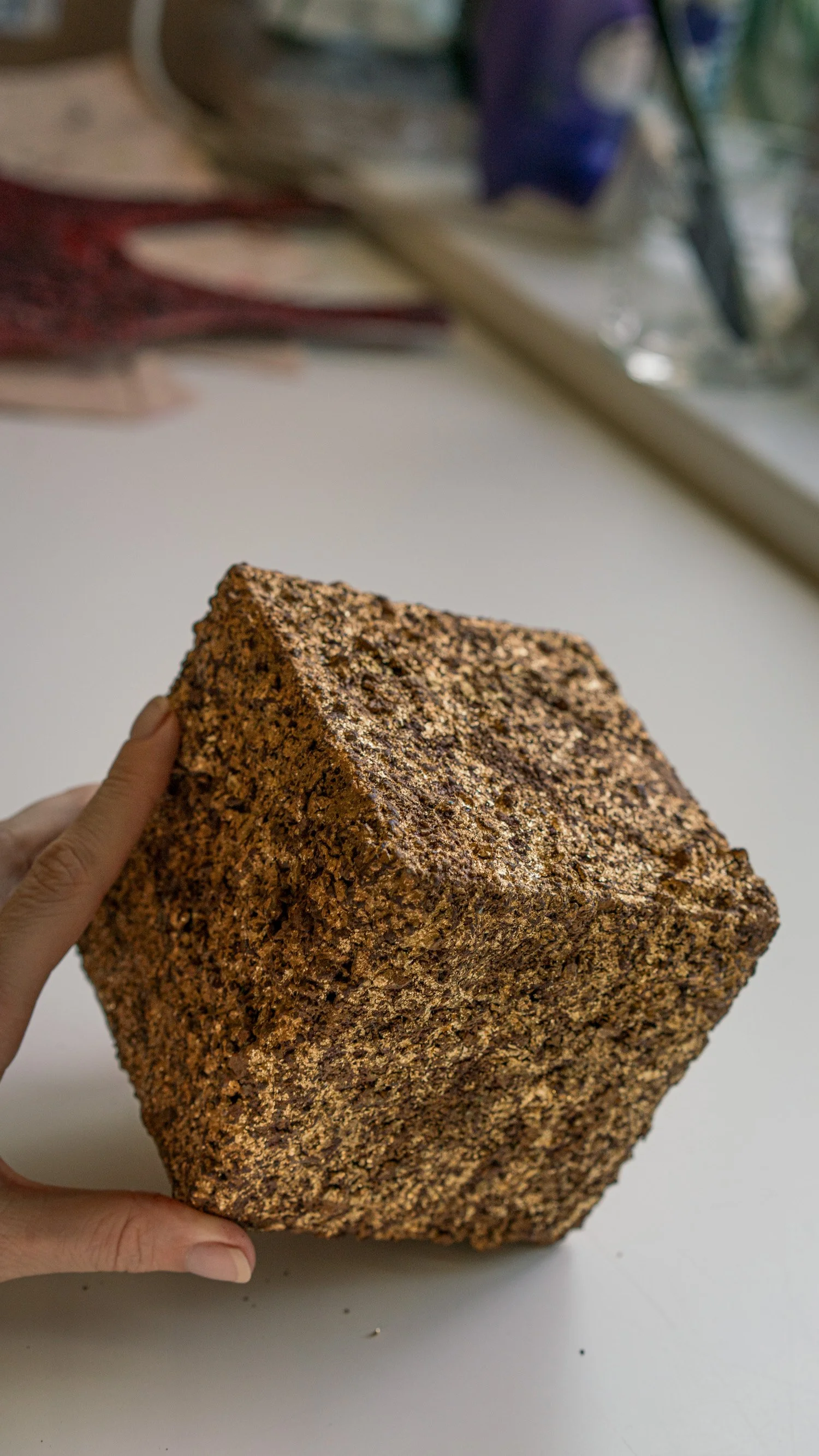
Objects carry histories. A discarded object carries evidence of previous use, economic value, consumption, labor, and social meaning. Sand and stone carry a different temporal and geological history. When these materials are placed together, their relationship creates a conceptual field in which different systems of value can be considered simultaneously.
This is why material investigation is central to my contemporary art practice.
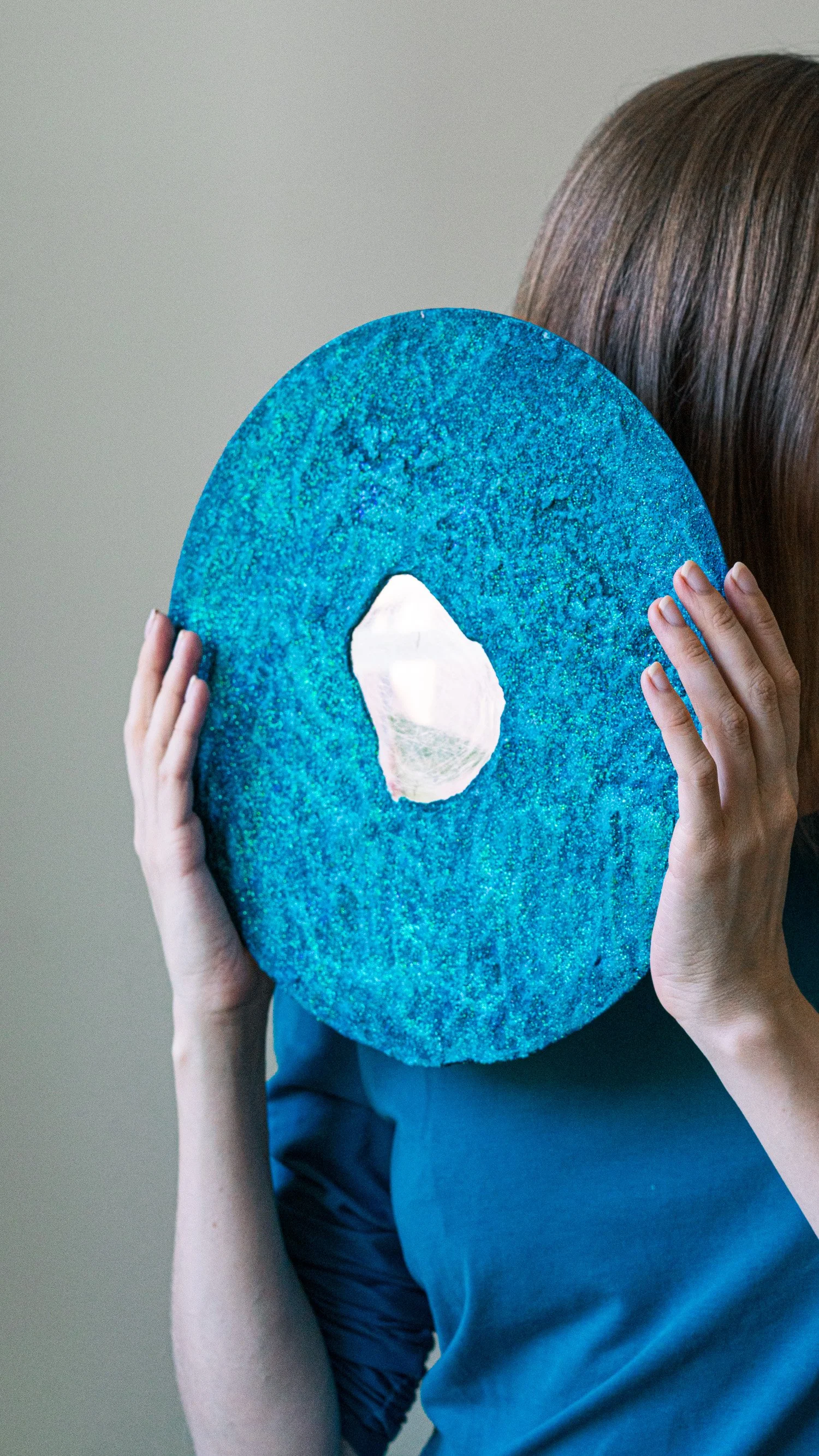
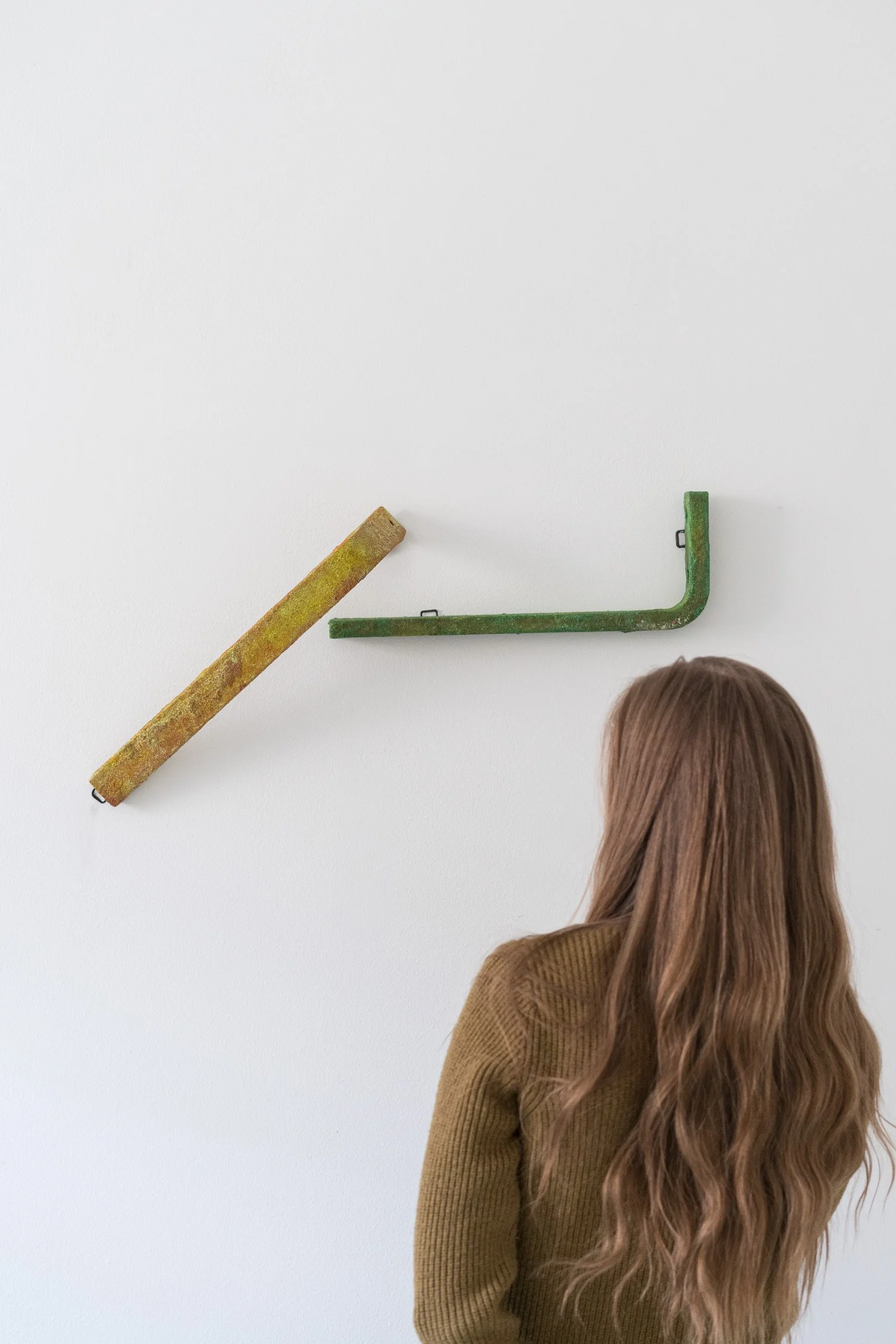
A relief surface of sand and stone layered on an object previously used by humans expresses equality as a principle of human existence with other living forms within Earth's biosphere. Material honesty and ecological logic guide every choice of form, including how matter is sourced, layered, and left visible.
The work performs the shift it proposes.
Rather than explaining an invisible structure through language alone, the material allows the structure to be encountered. The viewer sees the object, its surface, its history, its transformation, and the relationship between its components. Perception becomes part of the research.
The physical artwork becomes an instrument through which an abstract social structure can be approached.
Perception as an artistic material
The viewer's act of looking is not separate from the work.
If the central question concerns how societies organize visibility, then perception itself becomes an artistic material. The work asks not only what are you looking at? but also why is this what you are able to see?
The distinction matters.
A representation of suffering can tell the viewer what to think or feel. My practice is more interested in the conditions that determine whether something enters perception at all.
Rather than representing suffering directly, the work investigates the cultural conditions that allow suffering to disappear from public perception. It examines how language, economic systems, traditions, and everyday practices influence not only what people see, but also what they collectively learn not to see.
This creates a different relationship between artwork and viewer.
The critique is not a demand for agreement. It is an invitation to look again at what a society has agreed not to see, and to question how this agreement is organized and maintained.
The viewer is not positioned outside the system as an objective observer. The viewer enters the same field of visibility that the artwork is investigating.
In this sense, the artwork becomes a space for ethical perception.
From personal experience to contemporary art practice
The personal origin of the practice remains important, but the work does not remain autobiographical.
Growing up on a livestock farm gave me direct access to a reality that many people encounter only through mediated forms. The significance of this experience is not that it gives me a privileged position from which to judge others. Instead, it created a contradiction that became impossible to ignore.
I experienced killing as ordinary.
Later, I began to understand how unusual that visibility can be.
The distance between these experiences became an artistic question: how can the same society produce such different relationships to the same reality?
This question transformed childhood memory into artistic research.
The work therefore does not seek to reproduce the experience of the farm or to make autobiographical images of animals. Instead, it investigates the structures that allowed indifference to become ordinary there, and that allow distance to become ordinary elsewhere.
The personal experience is the entry point. The subject of the artistic research is larger.
It concerns how societies construct normality.
It concerns how ethical attention is distributed.
It concerns how value is assigned.
And it concerns how something can remain visible in material reality while disappearing from social perception.
Conceptual contemporary art and the living world
My practice enters contemporary art through this investigation of visibility, power, materiality, and perception.
It is not primarily an environmental art practice, although ecological questions are fundamental to it. It is not primarily animal portraiture, although production animals are central to much of the research. It is not primarily about sustainability, veganism, or recycled materials.
These are contexts within a broader conceptual investigation.
The central concern is how social structures shape perception.
Production animals provide a lens through which this question becomes particularly visible because animal agriculture brings together economic valuation, biological life, cultural tradition, institutional management, consumption, and physical death. It demonstrates how a living being can simultaneously be a biological organism, an economic unit, a commodity, a statistic, and an absence within public consciousness.
This makes the subject relevant to a wider contemporary discussion about the politics of life.
The work asks what happens when the categories through which societies organize life are brought into perception.
Who decides what a life is worth?
What makes one death publicly visible and another socially ordinary?
How does economic value interact with ethical value?
How do cultural systems teach people where to place their attention?
And what happens when these distinctions are no longer treated as natural?
The role of artistic research
Research is not an additional layer placed onto finished artworks. It is the method through which the artworks emerge.
I bring research and scientific data into art through analysis and conceptual shifts of the invisible to the visible. My installations are built from objects and matter, each carrying its own concept. The history embedded in each object, the metaphors it allows, the language of shape and color, and the ecological logic it belongs to form the foundation of each work.
This approach positions artistic research as a form of inquiry.
The artwork does not simply communicate an existing conclusion. It creates a material situation in which a question can be examined.
Scientific research can reveal information that ordinary perception cannot easily access. Historical research can reveal how a social practice became normalized. Economic data can expose relationships between value and life. Philosophical theory can provide language for structures that otherwise remain difficult to name.
The artwork brings these forms of knowledge into another register.
Through reduction and abstraction, research becomes material.
Through material, structure becomes perceptible.
Through perception, the viewer encounters the question.
This is the logic that connects research, visibility, material, and perception throughout the practice.
A practice of looking again
I work to give form to what a society has agreed not to see.
The purpose is not to produce a definitive image of the hidden. It is to interrupt the ease with which the hidden remains hidden.
The work asks the viewer to look again.
To look at an object not only as an object but as a history.
To look at a material not only as matter but as a relationship.
To look at an animal not only through its economic category but as a living form.
To look at perception itself as something shaped by culture, institutions, language, and power.
In this sense, making the invisible visible is not simply a visual strategy. It is a conceptual method.
The work continues where agreement has not yet been questioned.
It creates a space between seeing and understanding, between knowledge and perception, between what is materially present and what a society has learned to overlook.
This is where I locate my practice as a contemporary artist and conceptual artist.
The question is not only what can be seen.
The question is how we have learned to see.
And what, as a society, we have learned not to see.
Shape Change and connect with a community of artists who share your passion for ecological art and sustainable crafts. Share this article:
