
What Makes Sustainable Artwork Truly Sustainable
Pick up a piece of art and press your thumb against it. Feel the texture, the weight, the surface. That sensation already tells you something. Sustainable artwork is not a label you paste on at the end, it is material truth baked in from the first scoop of pigment to the last wrap of packaging. We built Vegesent on exactly this: reclaimed waste turned into stone-like wall pieces that feel honest before they say a word. Use this guide to spot the genuine article and push your own practice further.
The quick way to tell if sustainable artwork is genuinely sustainable
Four things give it away fast: material origin, studio process, how it shipped, and what happens to it in twenty years. Run any piece through those four and the picture sharpens quickly.
Material truth: what went in and where it came from
Ethical art sourcing should be named plainly. Look for specific, verifiable origins: recycled aggregate, reclaimed wood, responsibly harvested pigment with a traceable supplier. Vague phrases like "eco-inspired" or a leaf icon are not sourcing disclosures. If the substrate, pigments, and finishes are listed with real names, trust grows. If they are not, ask.
Process and waste: how the piece was made
Sustainable art practices live in the studio story, not on a website header. Solvent-free cleanup, minimised offcuts, and documented reuse plans are the signals. If a maker talks about low-impact art materials and then describes no actual waste plan, the story is incomplete. Show the process, then back it with words.
Transport and packaging: how it traveled
Air freight emits roughly 0.94 kg CO2e per tonne-kilometre; sea freight sits at 0.01 to 0.04. That gap is enormous. Recycled or plastic-free packaging, ground or sea shipping, and consolidated deliveries are strong markers. A single clear sentence about how a piece traveled says more than a full sustainability page written in generalities.
Afterlife
Durable, repairable surfaces outlast fragile coatings over any meaningful time horizon, and the lower replacement frequency alone reduces lifetime footprint significantly. Clear care instructions and take-back or repair options point to real lifecycle thinking. Upcycled artwork that can be reworked or resurfaced later is a genuine bonus. A piece designed to last twenty years with minimal intervention carries a far lower footprint than one that needs replacing in five.
Three things to check first: specific materials, a low-waste process, and lifecycle care.


Sustainable artwork materials that pass the sniff test
The lowest-impact art materials share a pattern: natural binders, minimal chemistry, and traceable origin. Once you know what to look for, reading a materials card becomes fast.
Pigments and binders that tread lightly
Earth and plant pigments with gum arabic, starch, or plant-resin binders reduce toxics and microplastics significantly. Watercolour and gouache consistently score lowest for environmental impact, requiring minimal solvents, water-based cleanup only, and no plastic binders that release particles into rinse water. Heavy-metal pigments (cadmium, lead) and solvent resins are the red flags. Casein is low-tox but animal-derived, so state that clearly if you use it.
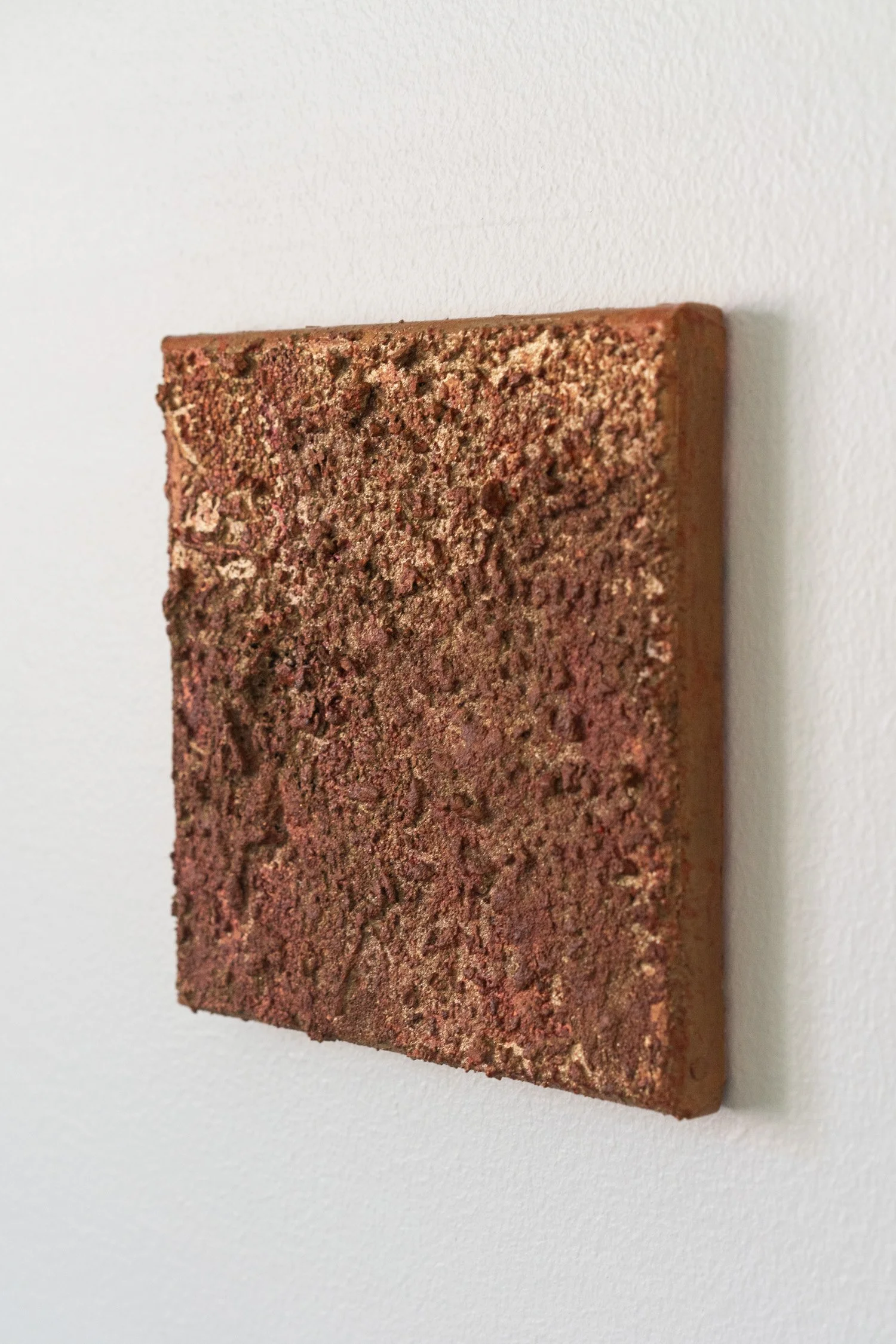
Acrylic binders are a documented source of microplastics; sewage studies report averages up to approximately 2.7 µg/L attributed in part to paints, including during rinse events (see research on acrylic paint rinse water and microplastics). Watercolours, which use natural binders, are expected to contribute negligible microplastics, though direct comparative measurements remain limited. That difference is worth knowing before you commit to a medium. We noticed it before we settled on our own studio standards.
artworks from the treasure collection 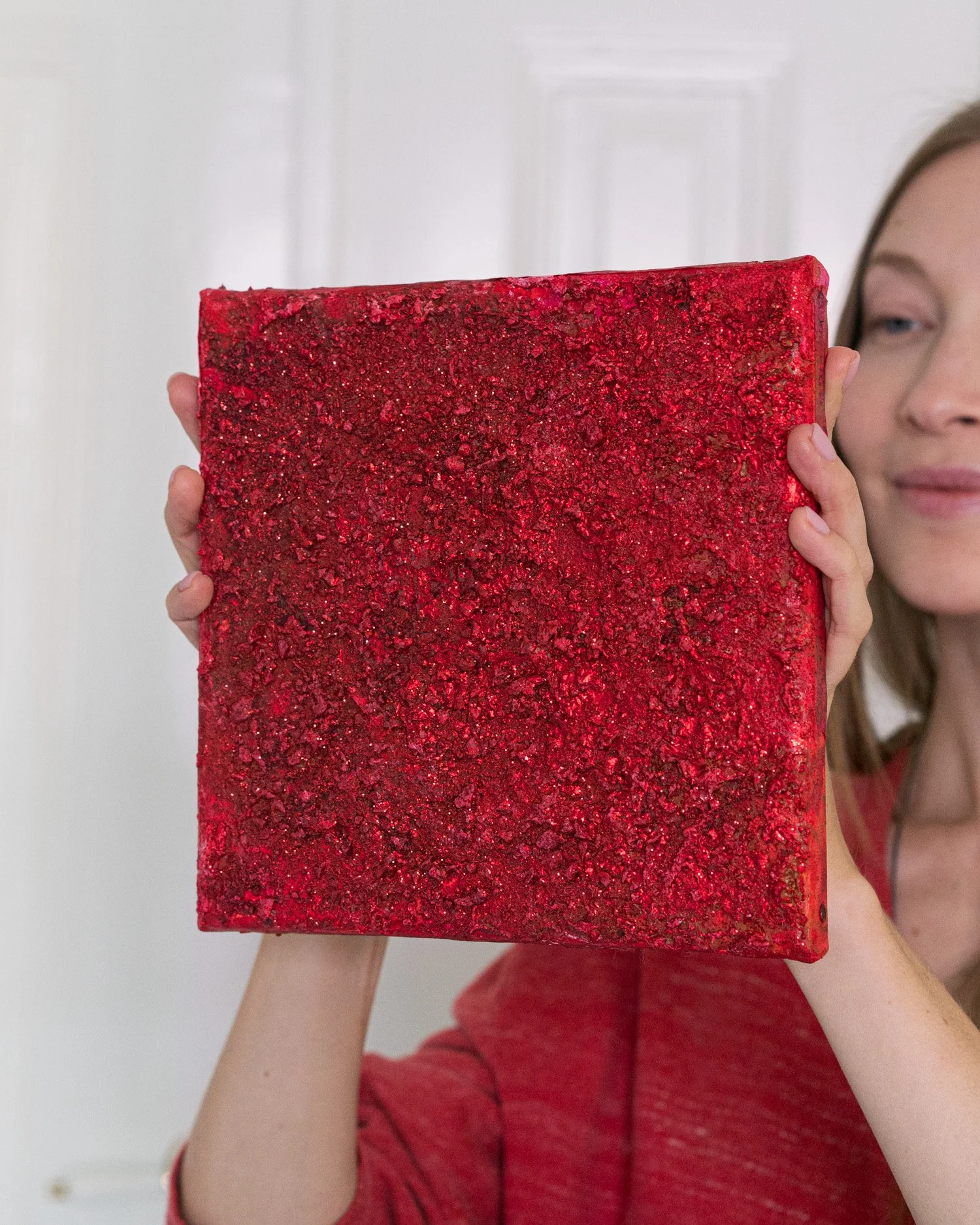
Substrates and papers that play nice with the planet
Recycled or reclaimed substrates, hemp or recycled rag papers, and FSC-certified wood for frames or stretchers are strong green art material choices. Name the recycled content percentage or the certification clearly, "natural canvas" without more detail is not a claim worth much. Hemp grows fast, uses low water, and makes excellent paper and cloth. Industry lifecycle analysis puts recycled rag paper at 50 to 70 percent less energy than virgin pulp production.
Water-based or soy and algae inks beat petroleum-based inks for eco-conscious art prints. Industry analysis suggests soy inks can reduce emissions by roughly 80 percent compared to petroleum offset inks. For sealers and adhesives, look for waterborne, low or zero VOC formulas. Zero VOC means under 5 g/L in both EU industry consensus and US EPA guidance, a number worth checking on the product data sheet, not just the label. For broader context on paint-related impacts and solvent emissions, see the overview of the environmental impact of paint.
Waste-light studios for sustainable artwork: habits that keep toxins and trash out
Studio practice is where the footprint lives day to day. Small, consistent habits cut more than any single material swap.
Switch to water-based materials and wet-wipe cleanup. Ventilate well and store rags safely in water-filled metal cans. Arts health bodies and studio safety guidance suggest that makers who make this shift can expect a 70 to 90 percent reduction in hazardous waste volume, along with a near-immediate drop in exposure symptoms like headaches and dizziness. Fewer fumes means sharper focus.
Smart waste handling
Solidify dirty rinse water with absorbents like cat litter or paper, let it dry, and bin it as solid waste rather than pouring it down the drain. Label and sort waste streams. Take hazardous leftovers to proper collection points rather than general waste. Reuse containers for mixing and storage. In our own studio, adopting solidification as a standard step brought liquid hazardous output close to zero.
Energy
LEDs cut gallery lighting energy use by 75 to 95 percent compared to incandescent or halogen. A single picture light switch saves roughly 173 kWh per year. Add a closed-loop rinse setup and you cut water use by 70 to 90 percent. Capture rainwater for tool cleaning where it is allowed. These are not dramatic overhauls, they are small switches that compound over time. For practical figures on LED electricity use, see this guide to how much electricity LED lights use.
Micro habits worth keeping
Buy small, test first, and keep a simple inventory to prevent duplicate purchases and unused accumulation. Standardise two or three low-impact material recipes so you repeat success rather than reinventing each session. Consistency beats occasional perfection.
Think in lifecycles: from sourcing to the wall
A single artwork touches six stages: sourcing, studio, packaging, transport, display, and end-of-life. Improve even one stage thoughtfully and the total footprint drops in a measurable way.
Julie's Bicycle and the Gallery Climate Coalition both provide arts-focused carbon calculators, Julie's Bicycle counts over 5,000 organisations among its users, while the Gallery Climate Coalition lists approximately 900 member galleries; check their websites for current figures. Treat the output like a sketch: directionally useful rather than a precise scientific report. Note where your spikes are. Exhibition lifecycle studies, including research by groups such as the Gallery Climate Coalition, often identify transport and display energy as the two dominant contributors for many artwork scenarios.
Shipping
That air-versus-sea gap covered earlier, roughly 0.94 kg CO2e per tonne-kilometre by air against 0.01 to 0.04 by sea, is not a rounding error. Road and rail sit in between. Batch shipments where possible, choose the lightest recyclable packaging, and publish the choice you made. Galleries we work with increasingly ask for this information upfront.
Framing
FSC-certified frames, repaired vintage frames, or minimal mounts reduce material use. LED gallery lighting and sensible climate settings curb ongoing energy costs. Frame for longevity and easy repair. A piece designed to be reframed or remounted in ten years creates far less waste than one built around a single-use mounting system.
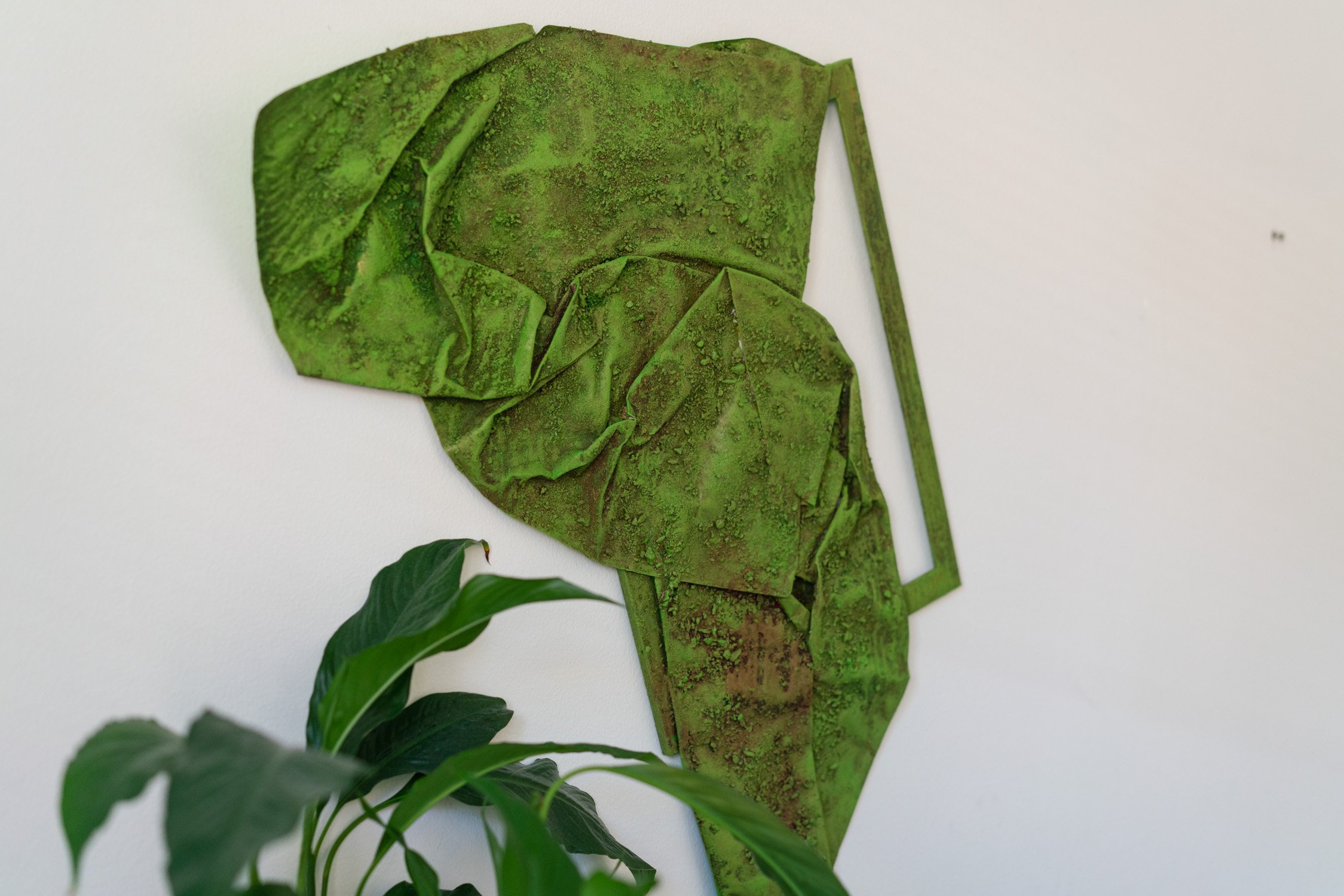
Labels buyers believe: transparent notes without the greenwash
List substrates, pigments, binders, finishes, packaging type, and recycled content percentages. Add a short lifecycle note and care instructions. One page is enough if it is specific. "Recycled materials" as the entire description is not a materials card. "Reclaimed aggregate from construction waste, plant-resin binder, waterborne sealer, recycled cardboard packaging" is.
How to price and present without greenwashing
Price for craft and durability, not for virtue signalling. Explain what the buyer's purchase supports: better materials, local fabrication, slower shipping, repairability. Avoid leading with carbon offsets as your headline sustainability claim. Reduction comes first. Offsets, where used, come after and should be described honestly with the standard and verifier named.
Common red flags and how to avoid them
Vague phrases, unverified "eco-friendly" claims, and silence on binders or packaging are the obvious warning signs. The subtler one is the absence of any acknowledged trade-off. No practice is perfect. Naming your limits honestly builds more trust than a clean, unblemished sustainability statement. Honest beats perfect, every time.
Galleries and collectors affiliated with bodies like the Gallery Climate Coalition increasingly expect process photos, supplier details, and shipping mode information. If you used low-impact art materials and eco-friendly art practices, say exactly which ones with the certification name attached. Keep it human and verifiable.

The Vegesent benchmark: reclaimed, vegan, materially honest
At Vegesent, every sculptural wall piece is made to our stated practice: starting from reclaimed and recycled waste, with no virgin plastics, no animal-derived inputs, and no vague sourcing notes. Material origin is documented for every work. The stone-like texture you see and feel comes from a circular studio process built around minimal waste, reused offcuts, and solvent-free working. That is the standard I hold and it shapes every decision from first material to final pack. I am also teaching this at a very special training I’ve created for other artists: Green growth: building your art career and impact.
Packaging is recycled and plastic-free as standard practice. I prefer consolidated ground or sea shipping over air. Each piece ships with a full materials and care card, the same kind of specific documentation this article asks you to look for in any sustainable artwork you buy or make.
If you want a tactile way into this kind of practice, my Mail Club sends a monthly material swatch, an eco chart card, and a simple recipe prompt so you can experiment with one new unconventional material at a time, without the research burden or financial risk of buying a full supply.

Author: Veronika Kvitko, known as Vegesent, is a multidisciplinary artist whose work explores environmental responsibility and animal visibility through conceptual approach.
She serves as the head of sustainable development and art education in Helsinki International Artists Association.

RELATED ARTICLES
RELATED ARTICLES


Vegan art isn’t just about materials—it’s about shaping culture. Exhibitions, collaborations, and storytelling in this space are educating audiences, inspiring change, and redefining artistic value. For eco-conscious beginners, it’s an invitation to turn creative passion into meaningful impact, gaining visibility, community, and purpose along the way.
Discover how vegan art can transform your practice and influence the cultural scene.